
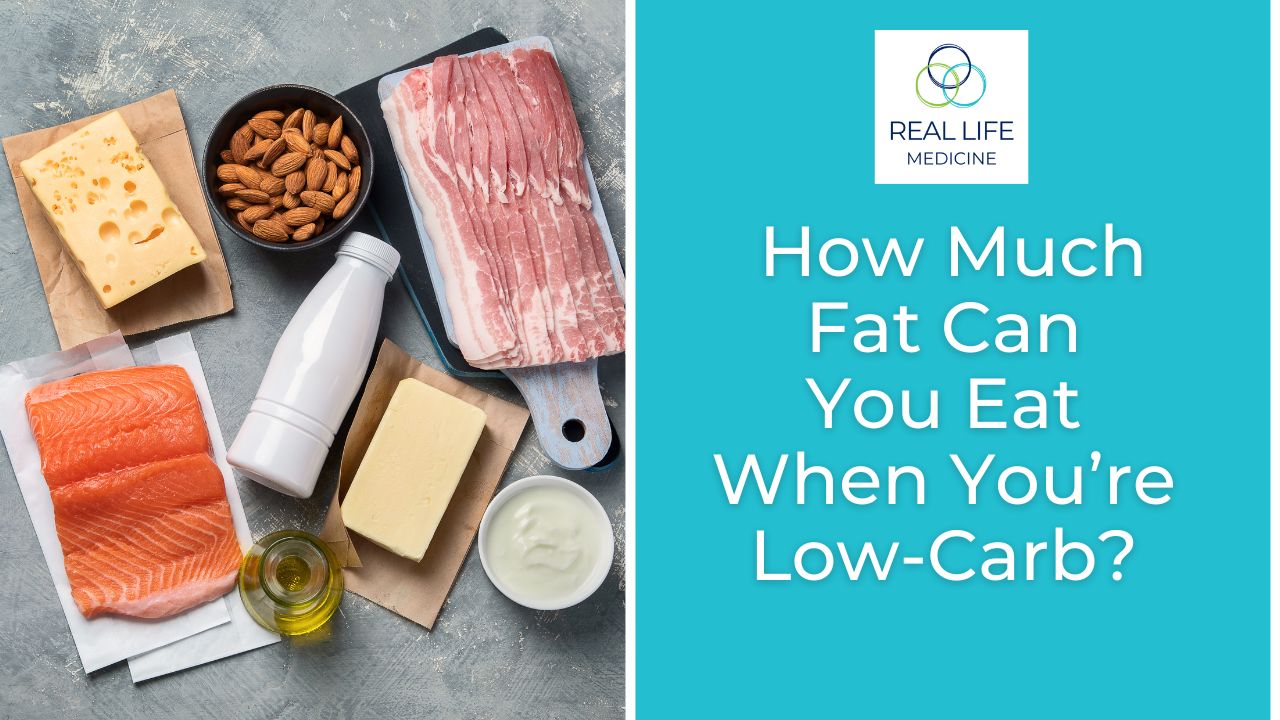
How Much Fat Can You Eat If You Are Low-Carb?
Apr 24, 2026The Low Carb Mistakes Nobody Talks About
There's a message floating around some corners of the low carb world that we need to address.
"Fat is free. Fat is fine. You can't overdo fat."
And look, we get why it's appealing. Fat doesn't spike insulin. Fat is delicious. Fat makes food satisfying. All true.
But if weight loss and metabolic health are your goals, piling on extra fat in the form of bulletproof coffee, handfuls of nuts, and generous slabs of cheese may actually be working against you.
Here's why, and it has nothing to do with calories.
It All Comes Down to Two Hormones
Insulin is your fat-storing hormone. It tells your body to lock fat away.
Leptin is your satiety hormone. It tells your body to stop storing fat and stop eating.
In a healthy, lean person, these two are beautifully balanced. Leptin does its job. Hunger switches off. Weight stays stable. This is why there were no obese cavemen.
The modern diet of ultra-processed, high-carb food breaks this system. Chronically high insulin leads to insulin resistance. And persistently high leptin leads to leptin resistance.
Most people carrying excess weight are leptin resistant. Their body produces leptin, it just can't hear it anymore.
What Actually Happens When You Eat Fat
Dietary fat takes a different metabolic pathway than carbs or protein. It bypasses the liver entirely, absorbs into the lymphatic system, and goes straight into the bloodstream and then into your fat stores.
No insulin spike. But also no free pass.
In a lean, leptin-sensitive person: Extra dietary fat raises fat stores, leptin rises, the body responds, hunger drops. They naturally eat less. Balance restored.
In a person with obesity or metabolic disease: Extra dietary fat still goes straight to fat stores, leptin still rises, but the body is deaf to the signal. Hunger does not drop. The compensation mechanism simply doesn't fire.
This is why high-fat additions don't deliver the weight loss they promise, at least not for the people most likely to be reaching for them.
So Is Extra Fat Bad?
No. Not categorically.
If you're lean, metabolically healthy, on a low carb or ketogenic diet, and not trying to lose weight, enjoy your bulletproof coffee and your cheese platter. Your hormones will sort it out.
But if you have a weight loss goal, or you're managing obesity, insulin resistance, fatty liver, PCOS, type 2 diabetes, or metabolic syndrome, then added fat is not your friend right now. This includes the seemingly innocent habit of snacking on nuts and cheese between meals or finishing dinner with a generous block of aged cheddar.
What to Do Instead
Eat low carb, real food. Full stop.
-
Three meals a day (or fewer, less is often more)
-
Whole foods until satisfied: meat, fish, eggs, seafood, vegetables, nuts, seeds, some fat for cooking
-
No snacking, no drinking your calories
-
Add intermittent fasting when you're ready
Eat the chicken. Eat the skin. Don't fear naturally occurring fat in whole food.
Just don't chase that chicken with a cup of coconut oil, a handful of macadamias, or a generous serve of brie before bed.
The goal is whole food low carb, not maximum fat low carb. There's a meaningful difference.
5 Common Low Carb Mistakes That Stall Your Progress
Even with the best intentions, these are the mistakes we see most often:
-
Drinking your calories. Bulletproof coffee, cream in every cup, and bone broth loaded with added fat all contribute to your energy intake without triggering the satiety signals that solid food does.
-
Snacking on "low carb" foods. Nuts and cheese are genuinely nutritious, but grazing on them throughout the day keeps insulin ticking over and prevents your body from ever dipping into fat burning mode.
-
Swapping one processed food for another. Low carb chocolate, keto bars, and packaged "health" snacks are still ultra-processed foods. They hijack your appetite, feed cravings, and undermine the whole point of eating real food.
-
Not eating enough protein. When people go low carb and fear fat, they sometimes under-eat protein too. Protein is the most satiating macronutrient, it preserves muscle mass, and it supports metabolic health. Prioritise it at every meal.
-
Back-ending your eating after dinner. Eating well all day and then grazing through the evening is one of the most common patterns we see. Nuts by the handful, cheese from the fridge, a spoonful of nut butter "just because" — it all adds up. Your body is winding down for the night, your insulin sensitivity is lower, and those extra serves have nowhere useful to go. Close the kitchen after dinner and let your body do its overnight repair work.
Fat is not dangerous. But it is not a free food either.
Eat real food. Heal your metabolism. Let your hormones do the rest.
The 6s for Success.
These are powerful levers to improve both metabolic health, mental health and the effects of menopause
- Sustanence
- Stress Management
- Sunlight
- Sleep
- Strength and Movement
- Social Connection
At Real Life Medicine, we believe in the power of small steps. You don't have to do all the steps at once.
We go further into this in My Metabolic Action Plan (MyMap)
This step-by-step program is the map to improved metabolic health that not only helps with weight loss and increases your energy levels and mood, but also reduces the risk of chronic disease in the future.
You can find out more about My Metabolic Action Plan here

Dr Mary Barson and Dr Lucy are the founders of Real Life Medicine. They help women who have been on every diet under the sun, optimise their health and achieve long-lasting weight loss without feeling miserable or deprived.
They do this with their 3-step framework that
- Improves metabolism
- Develops mindset skills
- Provides tools to implement it easily into busy lives
With this comes increased energy, vitality and confidence.
You can avoid chronic disease and stop living life on the sidelines!
You can find out more about My Metabolic Action Plan here
