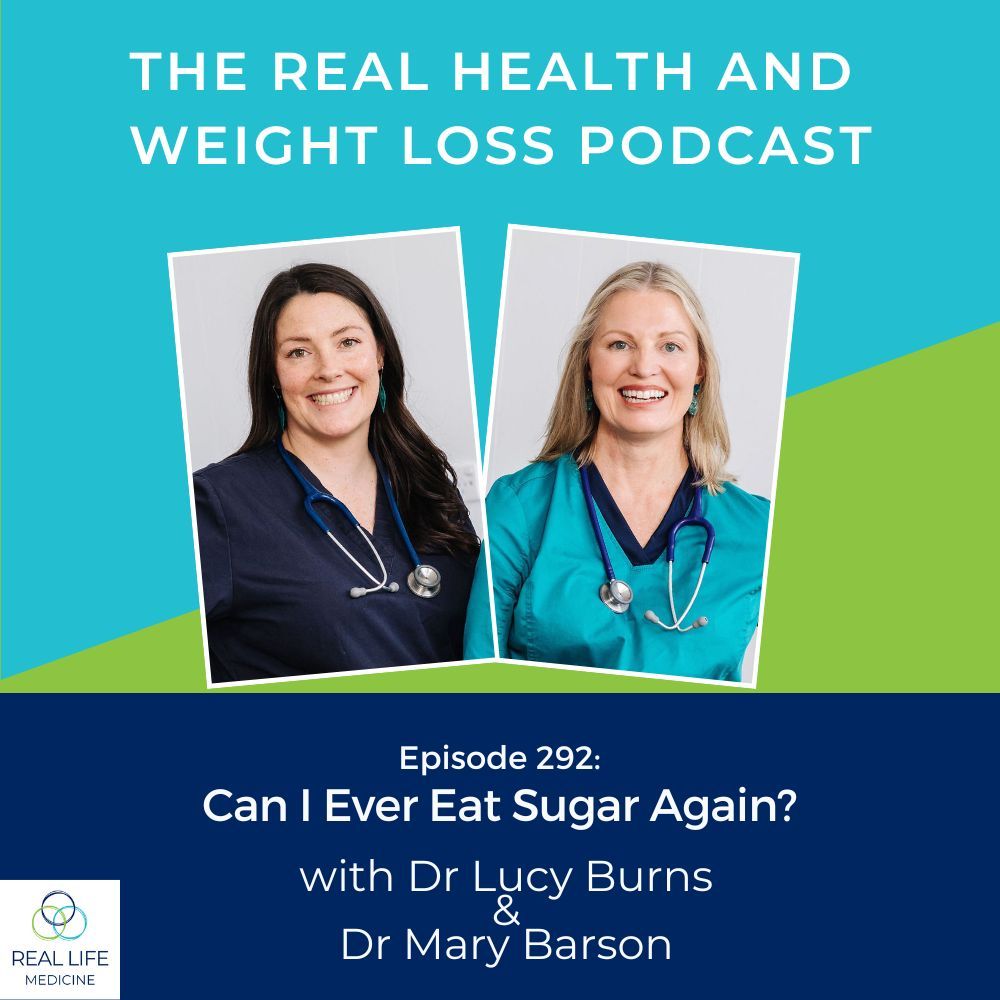

CAN I EVER EAT SUGAR AGAIN?
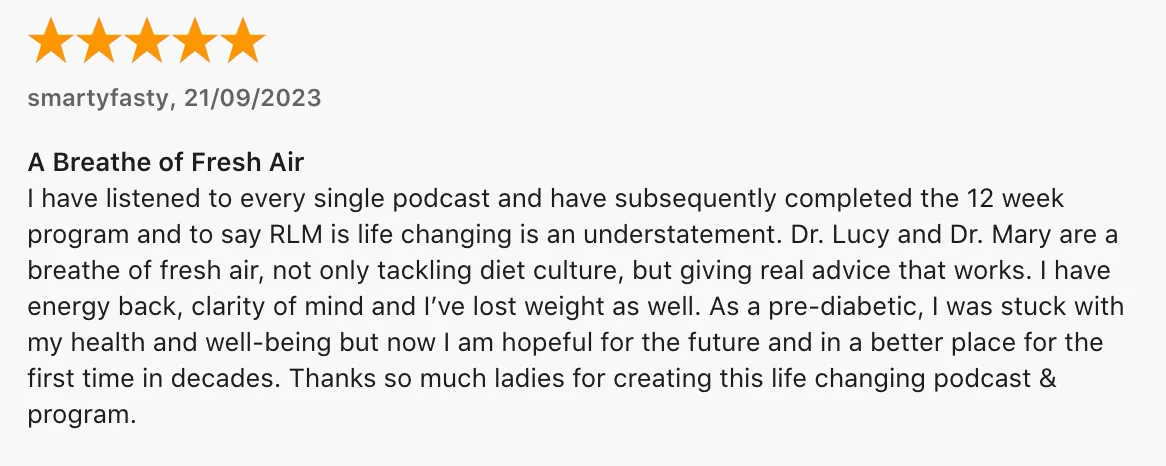
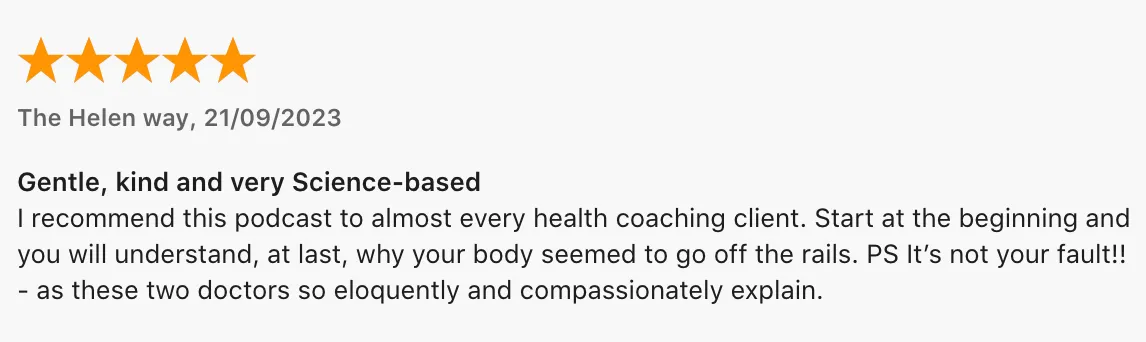
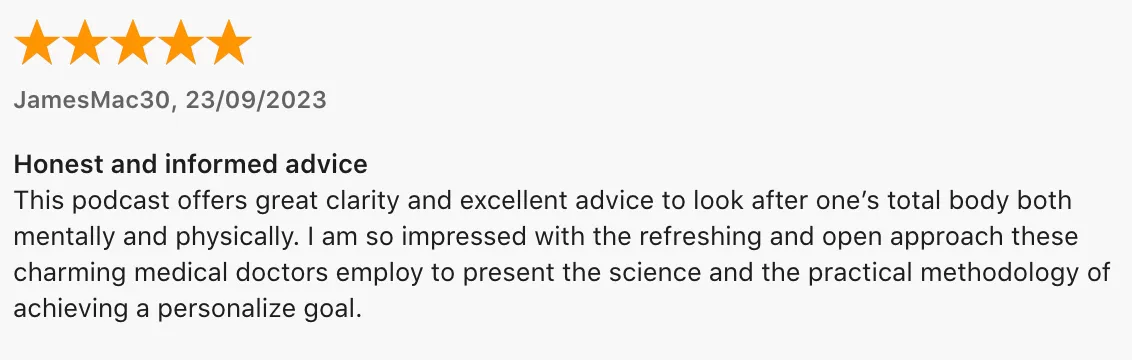
One of Australia's Most Popular Podcasts with Hundreds of 5 Star Reviews

Grab your FREE Ebook copy now!
Have you struggled to lose weight and keep it off?
Start your journey to boost metabolism and transform your body into a fat-burning powerhouse.
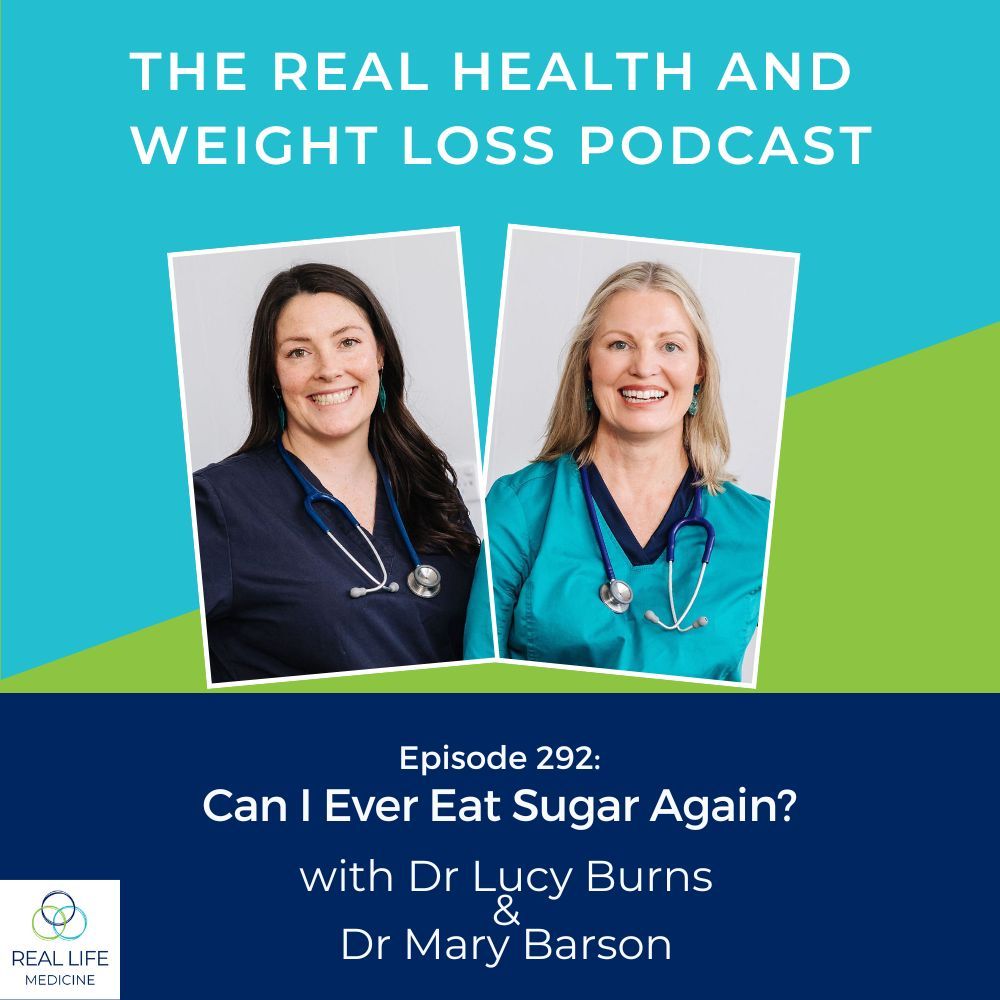
Episode 292:
Show Notes
The episode explores whether people who struggle with sugar and ultra‑processed food can ever safely eat them again, explaining addiction patterns, brain chemistry, and the mindset and skills needed to regain calm control around food.
The conversation explains sugar/processed food addiction in three “buckets,” how engineered foods drive dopamine and cravings, and why a structured “detox” plus mindset tools can move people from feeling out of control with sugar to a place of calm, flexible choice where occasional sugar does not trigger a long relapse.
- Ultra‑processed food is engineered for addiction
- Designed to be hyper‑palatable, give a strong dopamine hit, and be eaten very quickly, which drives repeat eating and craving.
- This mirrors other addictive behaviours like alcohol and gambling, where the brain chases rapid, intense reward.
- The three‑bucket model of addiction
- Bucket 1: Little to no interest; can take or leave cake, alcohol, or gambling without effort.
- Bucket 2: Heavy users with strong habits (nightly ice cream, daily “treats”) but some capacity to stop with effort.
- Bucket 3: Ongoing use despite clear harm (e.g., type 2 diabetes, obesity, losing a limb, major life damage) and still unable to stop.
- You can change “buckets”
- People can move from Bucket 3 to 2 to 1, but it requires skills, support, and time rather than just willpower.
- Both doctors describe moving from strong sugar dependence to now feeling closer to Bucket 1, where sugar feels optional and non‑compulsive.
- Dopamine, withdrawal and the “detox”
- Addictive foods light up dopamine pathways; when intake drops, people can feel sad, cranky, edgy, and intensely crave the substance.
- A short “detox” (even 4–5 days) focused on taking a break from ultra‑processed foods, while eating enough real food, helps down‑regulate dopamine and reduce “food noise.”
- Framing it as “I’m choosing to take a break” reduces fear and scarcity compared with “I can never have this again.”
- Why traditional dieting backfires
- Many people cut ultra‑processed food and also severely restrict overall intake, leaving themselves hungry and energy‑deficient.
- Hunger plus withdrawal makes cravings worse and increases the risk of “breaking” and restarting the cycle.
- Hot tools vs cool tools
- Hot tools: In‑the‑moment strategies to ride out a craving and re‑engage the thinking brain (e.g., tapping/EFT, deep breathing, grounding, distraction, making tea).
- Cool tools: Longer‑term practices that build capacity and resilience (e.g., sleep, stress management, general self‑care) so cravings are easier to handle.
- Both are needed, and like any skill, they require practice; one attempt that “doesn’t work” doesn’t mean the tool is useless.
- Emotional roles of sugar and food
- Sugar is often used to self‑soothe emotions such as stress, loneliness, boredom, and overwhelm, especially at the end of the day.
- Doing an “audit” of what sugar is being used for helps people find non‑food ways to regulate those emotions.
- Personal experiences from the hosts
- Both doctors describe past patterns of constant chocolate/ice cream use as emotional soothing, with cars and drawers full of wrappers and nightly ice cream rituals.
- After a real‑food‑focused detox and mindset work, they can now have an occasional sugary food without it triggering a long binge, and often find it less enjoyable or overly sweet.
- What happens when you do eat sugar again
- A higher‑sugar day can briefly wake up cravings, shift fluid/electrolytes, and cause feeling “cruddy” the next day, but this usually settles within about a day if real food is resumed.
- The key is expecting this, riding it out, and not turning one day into a weeks‑long spiral.
- Slips, lapses and compassion
- Early on, people often use low carb like a “diet” powered by willpower, which can work short‑term but fails without emotional regulation skills.
- Using the SLC (slip–lapse–creep) framework with self‑reflection, learning, and compassion turns each lapse into a chance to build skills rather than a reason for shame.
- Answering the core question: can I ever eat sugar again?
- For most people, yes: after detoxing, nourishing with real food, and building emotional and mindset tools, it is usually possible to have sugar occasionally without losing control.
- The focus is on gaining a calm sense of control around food, not living in permanent, fearful restriction
- We are launching in February 2026 — our newest program is your complete MAP to metabolic health. Join the waitlist to be the first to hear all the details. ➡️ www.rlmedicine.com/map
Episode 292:
Transcript
Dr Mary Barson (0:04) Hello, my lovely friends. I am Dr Mary Barson.
Dr Lucy Burns (0:09) And I'm Dr Lucy Burns. We are doctors and weight management and metabolic health experts.
Both (0:16) And this is the Real Health and Weight Loss podcast!
Dr Mary Barson (00:21) Hello, lovely friend. Dr Mary here for another episode of The Real Health and Weight Loss Podcast, joined by the gorgeous Dr Lucy Burns. How’s it going, Lucy?
Dr Lucy Burns (00:33) I’m very well, thanks, Miss. Very well. As I’m recording this, I have a sleeping puppy. So my puppy, Sunny, is getting older. I have been joking that she’s Jack Russell cross piranha, because she’s been biting everything — my shoes, my arms. I’m covered in scratches. But she is growing, and that is becoming less and less of a very unattractive trait that she’s developed. So yes, happy days, happy days, happy days.
Dr Mary Barson (01:01) Puppiedom is intense, but fleeting. So yes, enjoy it, but also enjoy it when it ends. Indeed, indeed.
Dr Lucy Burns (01:10) So today’s topic — this question we get asked again and again. And so the question is: can I ever eat sugar again? So we thought we’d dive on into that. Because I think as part of people’s reticence to start a low-carb lifestyle is their brain says, “But you can never have it again.” And we get stuck then in a bit of fear and scarcity mindset. We get stuck in a bit of, how am I going to cope? What’s my life going to be like without all of this? I don’t know if I can do that. That all sounds very hard. So maybe if I can never have sugar again, why not? I don’t want to do this — which is understandable.
Dr Mary Barson (01:48) It is. Our brains are just being human brains. There certainly was a time when I could not count going a week without sugar. I just thought that that would be difficult to the point of impossibility. I certainly don’t feel that way anymore. So Lucy, you’ve given multiple beautiful webinars on this topic, masterclasses on this topic — about sugar addiction, what it is, what people can do to help overcome it, and what it means for them long-term.
Dr Lucy Burns (02:20) Absolutely. So again, sugar addiction, processed food addiction, carb addiction — whatever words you want to use — is still somewhat controversial, but I think the world is coming around to the idea that there are people who are absolutely addicted, particularly to ultra-processed carbs or ultra-processed food. And it makes sense because, to be honest, the food engineers are wanting us to do that. They spend their time designing the food to not only be hyper-palatable — and what that means is our brain loves the taste of it — it also is designed to give us maximal dopamine effect. And interestingly, a third arm that I didn’t realise: it’s also designed to be eaten as quickly as possible so that you’re wanting to eat as many as possible. So the faster you absorb the food, the faster everything goes through your body, the more dopamine you get, the more you want. So I don’t think anyone can deny that that’s happening in the world of ultra-processed food. The way I like to describe this is the three-bucket theory I’ve got of addiction. So the first bucket is — and this actually applies to any addictive behaviour, really — the first bucket is where the substance or the stimulus is of no interest to you. And that’s the person who looks at cake and goes, “Oh, I don’t feel like it today.” And you kind of look and go, “Really?” Or the person that takes a bite of something and then leaves it on the bench and forgets about it. They’re the person that really doesn’t care that much about the food. Or it might be the drink. Maybe they don’t care. They’ll have a sip of champagne at a wedding and really couldn’t care less about it. Or they buy a raffle ticket and they never think of gambling. So that’s the first bucket. And that’s where the food manufacturers tell you you should be. So it’s not their product — it’s the fact that you’re not in the first bucket is your problem, is what they would say. The second bucket is the heavy-users bucket. And again, this is probably the majority of people that we see. And this is when people kind of get into habits of having a bowl of ice cream every night on the couch, or having a sweet treat — as they’re called — after every meal. So you have your lunch and then you have a little bar. You have a muesli bar. Kids get a lot of ultra-processed foods in their lunch boxes. So their brain and palate get very used to the texture and the taste of these foods. We can stop, but it does require some sort of forethought. And it’s the same with, again, alcohol — heavy users, not necessarily alcoholics. Gambling — we see this again, really particularly young men these days. They’re marketed to within an inch of their lives. They might bet with mates. They’re spending maybe a significant amount of their pay packet on gambling, but they’re not in jail and they haven’t lost their house. And, you know, there’s some harm, but it’s not horrendous. And then the third bucket of addiction is where the substance is causing significant harm, but we still don’t stop. So that’s again, for food and sugar — you know, someone’s got type 2 diabetes, they still don’t stop. They’re developing obesity, they still don’t stop. They’ve lost their foot, they still can’t stop. Alcohol — again, we all know people end up homeless, relationships break down because they can’t stop. Gambling — same thing. So that’s really that third bucket. So within the ultra-processed food world that we live in, people are most — obviously, we’re not seeing anybody from bucket one. They don’t need to come to us. We’re seeing all the bucket twos, and some people who are in bucket three wish they were in bucket two. And it is entirely possible to move buckets. So I think that’s really important to recognise. If you recognise yourself in one of those buckets, you can move — hopefully — to the lesser bucket, but you need skills to do this. So the thing about addictive substances and behaviours is that they cause our brain to require and light up with dopamine. And when that dopamine goes, we get like a withdrawal. And so we feel — you know — again, we can feel sad, we can feel cranky, we can feel irritable, we can feel edgy. And what your brain is actually wanting — then it starts talking about wanting the substance again. And you have it. And it’s not even necessarily the taste of it. But when you’ve had it, you get this sort of relief and your brain just goes, “Ah, that feels good.” And so you go, “Good, thank God.” And so we can get stuck in this behaviour where every day we’re waking up, vowing and declaring not to eat it, get halfway through the day, our brain’s going, “Oh God, this is…” you know, it’s yelling out for this sort of dopamine. And so, you know, all of a sudden a Snickers comes along and you just have it. You don’t even know why sometimes, but you just have it. And you feel better and you go, “Good. Oh good. I’ll start again tomorrow.” And the whole cycle continues. So certainly having a little detox can be really, really useful. When our brain goes, “Can I never have a Lindor ball again?” If we say to our brain, “No, you can never have it again,” well, of course it just wants it all the time. So a really useful strategy, I think, can be: “I’m just taking a break. I’m just taking a break from it.” And there’s no fear then for your brain to think “never, ever.” And there’s also a sense of agency, because you’re choosing to take the break. So it’s not like, “I can’t eat that. Oh no, I can’t eat those.” It’s just, “I’m having a break.” We do this all the time with lots of things. You know, people have a break from social media. People have a break from alcohol. That’s all considered fine. But as soon as you decide you’re having a break from some ultra-processed food, everyone either tells you, “Oh my God, you’re going to die. You’re not being good again, are you?” Or they try and sort of shovel it into you. It’s really helpful to have a break. You down-regulate that dopamine. Yes, absolutely. But you need a little plan. You need to be ready. You need to think about how that’s going to look for you. And you also need to nourish your body with real food at the same time. So I think the mistake that a lot of people do is they go on a traditional diet where they go, “Right, I need to lose weight,” and they cut out all of their ultra-processed food, but they also don’t eat enough food either. So they’re energy-deficient — which, again, isn’t that the catch-cry of all those gym bros out there? Calorie deficit. So you’re actually hungry and you’re trying to down-regulate receptors. It’s a really unhelpful process, and we often fail.
Dr Mary Barson (09:46) So you're talking about doing a detox, isn't it? To use that vernacular. So that you did take a break from the substance, which is causing you harm, in this case, the sugar or the carbohydrates, you take a break for a while and your brain is going to be uncomfortable. It's going to really, really want the dopamine hit because it's been used to getting the dopamine hit, not getting the dopamine hit, you're going to be uncomfortable. But if you accept that, anticipate that, but also at the same time, really nourish yourself very well with real food, you're going to be able to ride out that discomfort more easily. So what happens at the end of that detox?
Dr Lucy Burns (10:26)Okay. So you do the detox, you've nourished yourself well with food. We're not worrying about weight loss at the start. The goal is detox, downregulating dopamine. So that is the absolute goal. You just want to get a number of days in a row, even four or five, that'll be enough. That downregulates your dopamine. You go, good. So your brain is less cravy, there's less food noise and less food chatter about the substances, because again, you haven't let hunger cloud the picture either. So the next step is we need to learn the skills to manage our mind that don't involve food or using that substance. So again, a little audit, what was I using that substance for? Sometimes you don't even know, but if you dive deep into it, so it might be to alleviate boredom, it might be because you're stressed. It might be because you're lonely. It might be because you're sad. All of those reasons, we look and we go, we do a little audit, and then we need to learn some skills to soothe ourselves. And again, this is where your hot tools and cold tools concept comes in, Miss. So for our listeners, can you explain what a hot tool and a cold tool is?
Dr Mary Barson (11:37) Yeah. So hot tools are things that help us in the moment when we've got the craving is hitting us, the emotions are high. We need something right now to help us regulate ourselves right in this moment. And there's all kinds of tools that we can use to help us in that moment. Some of my favorite are tapping. We teach everyone in momentum, tapping, emotional freedom technique, really powerful. Deep breathing can work. Distraction techniques can work. Make yourself a lovely cup of tea, really focus on that. You can take a moment to ground. There are multiple tools at the moment that will take you out of your emotional brain because our amygdala is heavily involved with cravings as well as when we're feeling stressed, angry, shamed, guilty, all those things. We're pretty much in a fight or flight response when we've got that craving and anything that will help just regulate our brain, help get our thinking brain back online so we're not all inside our emotional brain, then that helps. It just knocks down the intensity significantly. It's not like the craving magically disappears or the horrible emotions just magically go away and all of a sudden we're just in some beautiful state of intense pleasure. That's not the goal, but we reduce the intensity markedly with these simple tools that we can all practice. Then in that state, you are able to make a useful decision, take a useful action, do something that is helpful. That will then serve your long-term goals. They're the hot tools. You need the tools, but you need them right now. The cool tools are things that set us up for success, that just generally make healthy change easier long-term. They are things that improve our resilience, improve our stress management, improve our sleep, essentially improve our capacity. Symptoms of craving and high emotion, they're easier to deal with when we've got an improved capacity. Hot tools and cool tools, we need both.
Dr Lucy Burns (13:48) Absolutely. Again, they take time. You don't learn a new language overnight. You don't learn a new tool overnight. Sometimes I see people go, oh, well, I tried a hot tool. It didn't work. It's like, okay, but sometimes we need to try a couple of times or we try a different one. Again, when we learn how to manage our emotions, how to regulate our emotional, how to improve our lability so we're less up and down, is what that means, then you get more confidence. I used to say that I was addicted to sugar. I think I was. I really did. I ate a lot of chocolate, a lot of Maltesers. It came with me everywhere. It was like my shadow. I always had a bag of something in my handbag. I always had something in my drawer just in case at work. My car, well, it was full of wrappers. These days, I can actually have something that's sugary and it doesn't send me off on a spiral. I'm not then having one dessert and then turning it into a six-month bender. I never wake up fearing that thing where I think, oh, God, I've got to stop the sugar, but how am I going to do it? That just doesn't happen anymore. I think I have probably gone from what I think was probably Bucket Three into maybe Bucket Two, but now I feel like I'm in Bucket One. I do feel like those people that you hate that go, oh, yeah, cake, no, not today. Or, oh, yeah, I wouldn't mind a bit of cake today. You have a bit and nothing happens. Yeah.
Dr Mary Barson (15:28) Yeah. I think my story is pretty similar too. I reckon that I probably am in Bucket One now. I used to have ice cream was my thing. I would need ice cream, especially at the end of a hard day, soothing, work, solo parenting, just all of the things, the stress that overwhelmed the emotions would build up over the course of the day. As soon as my bubby was in bed, I'd be there with my connoisseur of vanilla ice cream or my Ben and Jerry's cookie and cream ice cream. I'd just shovel it in and it just soothed and it just worked. I felt calmer, but it was disastrous to my health. And I remember the first time after I did essentially what was a detox, I was just able to walk past the ice cream aisle and I didn't feel like I desperately needed it. And now I will sometimes have an ice cream, like go out with the kids and we'll get an ice cream, but I don't like it very much anymore. I sort of like, oh, this is a bit disappointing. It's sweet. It's cold. All I can taste is the sweet and I don't even finish it. That's just very different to how I was. I think it's important to note that if I do have a day where I have more sugary foods, the next day I can feel a bit cruddy and a few things can happen. The cravings can sort of just wake up a little bit. Also, I've got fluid electrolyte shifts from having dumped a whole lot of sugar in my body. And so I can feel a bit tired and a bit cruddy. So mentally and physically, I can feel a bit off, but it doesn't last. If I just know that that's going to happen and I can just let it ride out, even after a day, it's gone. That's what my experience is.
Dr Lucy Burns (17:07) Yeah, absolutely. I think mine’s the same. And again, you and I, we’ve been doing low carb for eight or so years. It’s not something that I would be saying to people in the first couple of weeks, “Oh, well, you’ll be fine now.” It can take a little while and it takes a few goes. Again, when I first went low carb, I approached it like a diet, and I’m very good at it. I’ve got very good willpower. I’ve got very good self-discipline. I can do a diet. That was easy. But I’d never, ever had trouble losing weight. I always had trouble keeping it off because I had no skills. Whereas now, I kind of think — so initially, the detox was easy. I didn’t really learn any skills initially and had to learn the skills along the way. So I had lots of slips, lots of lapses, but approached them all then with the SLC — the slip-lapse creep. We approach that with self-reflection, the learning, and doing it with compassion. And when you do that, suddenly you’re learning skills, you’re learning more about yourself. It’s a wonderful journey of personal development. And what you gain is this feeling of like, I feel like I have control around food. It’s not that I don’t feel controlled by food — I just feel in control. It feels effortlessly in control. Like I’m not there tightly holding everything, thinking the whole world’s going to fall apart. I just go, “Oh, okay.” Oh yeah, a bit like you — we’re away, maybe I’ll have an ice cream. And a bit like you, I mean, I loved any sort of sugar, but I don’t then start thinking, “Right, well now I’m going to have ice cream every night on the couch.” Like, I just don’t do that anymore.
Dr Mary Barson (18:48) Yep. That’s nice, isn’t it? It’s just calm.
Dr Lucy Burns (18:54) Yeah. So I guess the answer to the question, “Can I ever eat sugar again?” — the answer is most likely yes. You can certainly move buckets, but you need to do it with some skills and some kind of self-awareness and backup plan.
Dr Mary Barson (19:09) Yep.
Dr Lucy Burns (19:11) Perfect. All right, lovely friends. That’s it from us. We will talk to you all next week. Have a wonderful, wonderful week and, you know, may you make the choices that you’re happy with.
Dr Mary Barson (19:23) Bye, guys.
Dr Lucy Burns (19:16) The information shared on the Real Health and Weight Loss Podcast, including show notes and links, provides general information only. It is not a substitute, nor is it intended to provide individualised medical advice, diagnosis or treatment, nor can it be construed as such. Please consult your doctor for any medical concerns.