

GETTING BETTER CARE IN A BUSY HEALTH SYSTEM WITH DR LOUISE PHILLIPS
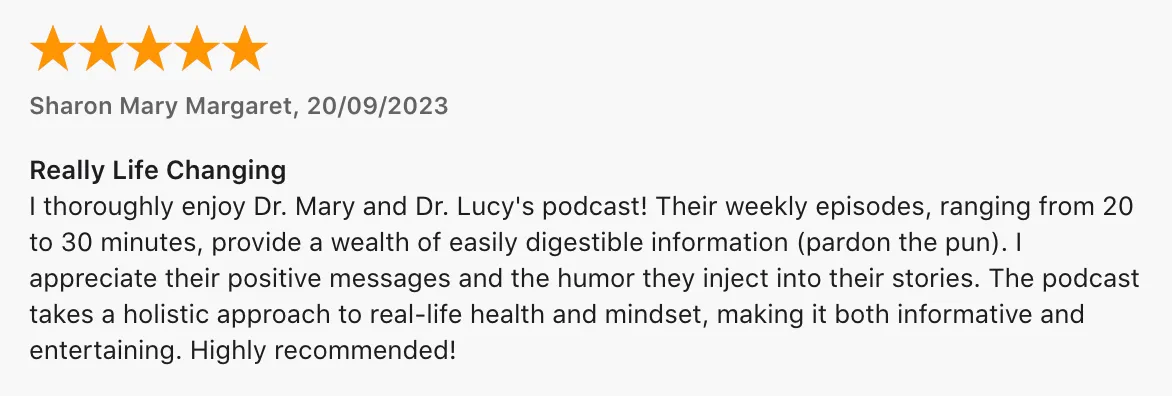
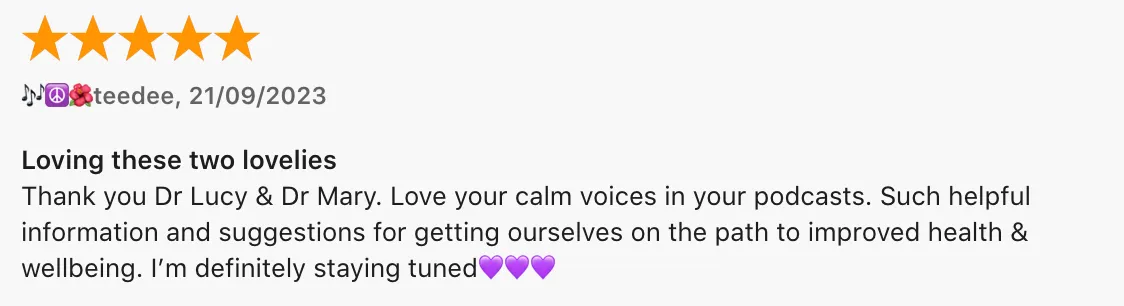
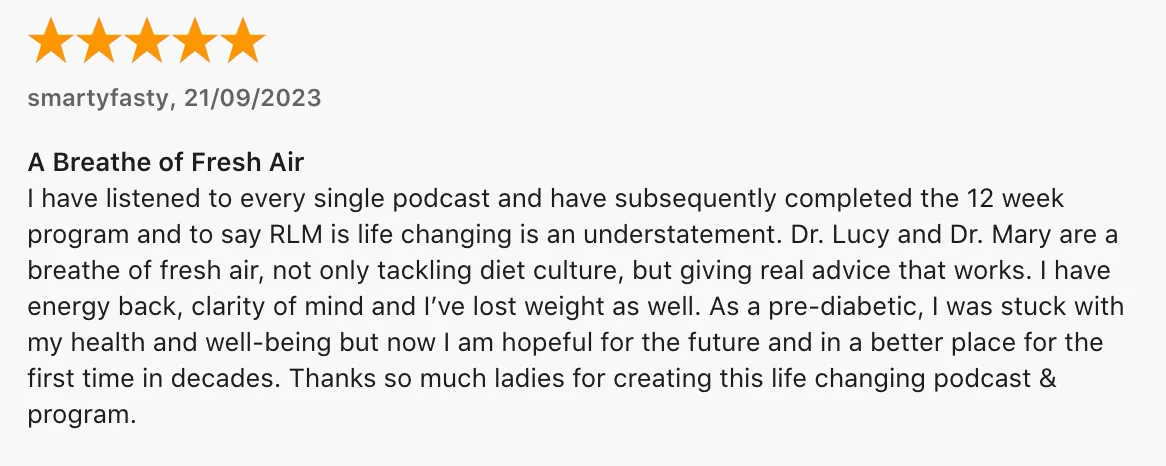
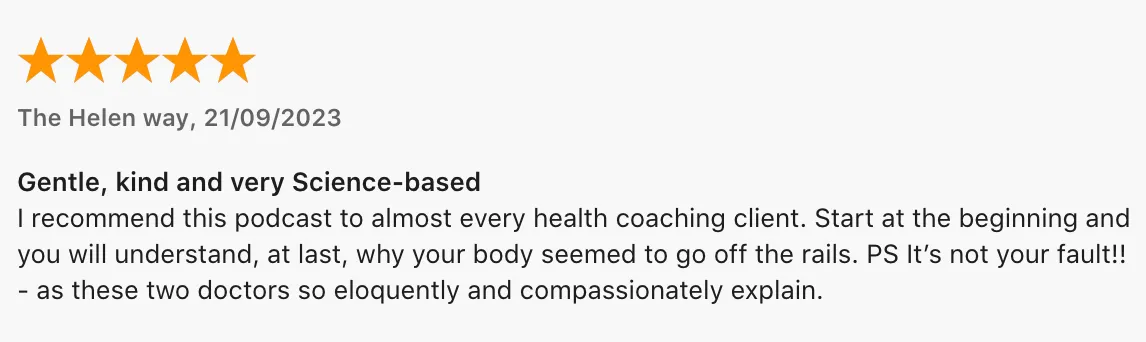
One of Australia's Most Popular Podcasts with Hundreds of 5 Star Reviews

Grab your FREE Ebook copy now!
Have you struggled to lose weight and keep it off?
Start your journey to boost metabolism and transform your body into a fat-burning powerhouse.
Episode 301:
Show Notes
Dr Mary Barson hosts Dr Louise Phillips, a Queensland GP with over 20 years of experience and a passion for helping patients improve their metabolic health while supporting healthcare professionals to thrive. She is the founder of Low Carb Scripts, where she teaches doctors how to apply practical nutrition strategies in everyday practice.
Dr Louise also works as a medical educator at the University of Queensland and is actively involved in training the next generation of GPs. As a contributor to the Australasian Metabolic Health Society, she is dedicated to making complex metabolic science simple and actionable for both patients and clinicians.
What's Changed in Metabolic Health
- The US dietary guidelines have shifted to resemble a low-carb food pyramid, lending mainstream credibility to low-carb approaches
- Diabetes Australia now officially lists very low-carbohydrate diets as one of three ways to reverse type 2 diabetes — alongside bariatric surgery and very low energy diets (meal replacement shakes)
- Low-carb options have become widely available in mainstream supermarkets and venues, signalling broad cultural adoption
Explaining Insulin Resistance to Patients
Dr Louise uses Jason Fung's "sugar bowl" analogy: sugars (from fruit, added sugar, and starch) fill the body's bowl; once full, excess spills over as rising blood sugar, liver fat, belly fat, or high triglycerides. Rather than prescribing strict keto, she recommends low-carb real food — any movement toward real food and fewer carbs is beneficial.
Her practical patient handout includes:
- Read ingredient lists first; if more than 5 ingredients, it's ultra-processed
- Aim for ≤5g carbs per 100g on food labels
- Avoid sugars and vegetable oils
- Eat real food, no more than 3 times a day, and eat protein first
Tips for Patients Seeing Their GP
Dr Louise offers practical advice for making GP appointments more productive:
- Turn up on time — a 10-minute late arrival cascades through the whole session
- Book the right appointment length — don't try to cover 6–7 issues in 15 minutes
- Share your full list upfront — doctors can triage better at the start than at the end; patients resent being told "come back" after spending 14 minutes on minor items
- Understand that a chronic issue won't be resolved in one visit — it's a journey
Addressing Overwhelmed or "Stuck" Patients
Dr Louise's two-step approach for overwhelmed patients:
- Address mental health first — if depression or life stress is severe, lifestyle changes are unlikely to stick until that's more stable
- Take a quick dietary history (2 minutes) — identify one small change (e.g., swap to low-carb bread, stop evening snacking) and ask "Is that doable for you?" to build early wins and self-efficacy
For comfort eating specifically, she uses mind behaviour therapy (with psychiatrist Dr Angelo Giovannis): intervening at the earliest sign of anxiety before it escalates into emotional eating. The analogy used: "If cake is your only tool to build a house, it won't work — you need a full toolkit."
Changing Trajectory, Not Perfection
For patients who feel it's "too late," Dr Louise reframes the conversation around trajectory: even small dietary changes can shift a path from one of medication escalation and hospital admissions to one of improved energy, clearer thinking, and better quality of life. Low-carb diets can reverse metabolic disease, not just manage it.
Key Blood Tests for Metabolic Health
Dr Louise orders a focused panel:
|
Test |
Purpose |
|
Full blood count |
Check for anaemia |
|
Liver & kidney panel |
Organ health |
|
TSH (thyroid) |
Rule out thyroid dysfunction |
|
Iron levels |
Fatigue workup |
|
HOMA-IR (fasting insulin + glucose) |
Measure insulin resistance |
|
HbA1c |
3-month blood sugar average |
|
Lipid profile (triglycerides, HDL) |
Metabolic risk markers |
She recommends tracking these over time and celebrating improvements — inspired by Dr David Unwin's approach of printing results and acknowledging wins, which powerfully reinforces behaviour change.
Doctor Burnout & Low Carb Scripts
Dr Louise highlights that GPs won't prescribe lifestyle medicine if they're burnt out and running late — prescribing a pill is simply faster. Low Carb Scripts (lowcarbscripts.com) addresses this with:
- Low Carb Doctor's Kit — visual patient education tools used at point of care
- Running on Time — a $30 one-hour course teaching GPs time management
- Tools for Wellness — burnout reduction strategies for home and work
- 51-page information pack — covering vegetarian, complex, and advanced cases
Dr Mary highlighted RLM’s 31-day hypnosis program at https://www.rlmedicine.com/feel-better as a powerful tool for lasting behaviour change, especially given this episode’s focus on mindset and sustainable habits.
Connect with Dr Louise
- Website: https://lowcarbscripts.com/
- Consultations: Available at Albany Creek, Brisbane via https://www.radiusmedical.com.au/

Episode 301:
Transcript
Dr Mary Barson (0:04) Hello, my lovely friends. I am Dr Mary Barson.
Dr Lucy Burns (0:09) And I'm Dr Lucy Burns. We are doctors and weight management and metabolic health experts.
Both (0:16) And this is the Real Health and Weight Loss podcast!
Dr Mary Barson (00:21) Hello, lovely friend, and welcome to this episode of The Real Health and Weight Loss Podcast. I am Dr Mary Barson, and today I am very excited to be joined by special guest, Dr Louise Phillips, who is a GP extraordinaire. Dr Louise Phillips is an Australian general practitioner in Queensland. She works at the Albany Hills Radius Medical Centre. She's got over 20 years’ experience and a strong passion for metabolic health and medical education, as well as supporting doctors to thrive. She's lead educator and content director at Low Carb Scripts, where she helps clinicians confidently use nutrition, especially low-carb approaches, to improve the health of their patients and their patient outcomes. Alongside her clinical work, Dr Louise teaches medical students at the University of Queensland. She mentors GP registrars, which are GPs early on in their career. And she contributes to the Australasian Metabolic Health Society, helping shape the future of metabolic health in Australia. Known for her practical and down-to-earth approach, Louise is passionate about making complex science simple and understandable, and she's also passionate about helping both patients and doctors create that sustainable and meaningful change. So, Dr Louise, it's so good to have you back. Last time you were on the podcast, it was 2023, so it's been a while. So tell us, I'd love to hear: what do you think has changed since we've last had you, and what do you think is happening on the ground right now with everyday Australians?
Dr Louise Phillips (02:11) Yes, so I think an enormous amount has changed since I last spoke to you. One of the biggest things, I think, is the US dietary guidelines having changed and basically becoming a low-carb food pyramid. I think that really gives us all hope in Australia that our guidelines will change, and I think it gives confidence to patients as well that what we previously were prescribing very differently from the food pyramid is now sort of modern and up to date. So I think that makes things a lot easier. And I also think the fact that very low-carbohydrate diets are recognised as being one of the three ways of reversing type 2 diabetes, and Diabetes Australia lists it on their website in their management section as being appropriate to use, and all of those things enable practitioners to practise with a lot more confidence that they're not going against guidelines. And there's so much more, I think, patients are so much more aware of it. There's so much more availability of low-carb options nowadays, especially low-carb beers. I think the fact that there's so many low-carb beers out there shows how much it's being adopted mainstream.
Dr Mary Barson (03:16) Absolutely. I myself am quite a fan of low-carb beer when I go camping. I am grateful. It's just so freely available right now. Same.
Dr Mary Barson (03:25) It doesn't require a special trip into Geelong. I can get it at my local rural town. Yeah.
Dr Louise Phillips (03:30) Absolutely. Yeah.
Dr Mary Barson (03:34) Yes. Before completion, one little thing you said there I thought was really interesting, that Diabetes Australia recognises it as one of the three ways to treat and reverse type 2 diabetes. What are the other two that they mention?
Dr Louise Phillips (03:47) Well, bariatric surgery, and then the third one is very low energy diets, so shakes and things like that, which do work in the short term but are generally unsustainable in the long term due to people being hungry and regaining weight if they go on to a normal sort of diet.
Dr Mary Barson (04:04) Yes, yes. Well, I think my bias is probably fairly obvious to everyone, but I do believe that a well-balanced low-carbohydrate approach is a great way to improve your metabolic health and manage type 2 diabetes. So your genius zone, I think one of your genius zones, would be fair to say, is your ability to communicate and to help other people communicate too. This is like the whole basis of Low Carb Scripts: it helps busy doctors be able to communicate this really important and really helpful information in a simple and easy way. So I would just love to know, when you are sitting down with a patient, say a patient who is struggling with their weight or their blood sugar or could have prediabetes or type 2 diabetes, how do you explain insulin resistance in a way that actually clicks for them?
Dr Louise Phillips (05:00) Sure. And I'll also just say that I'm a mainstream GP, so I'm a family doctor, so I see everyone from babies through to elderly people, and they could come in with absolutely anything, and often their metabolic health is not really the first thing that they're coming in for and it's not at the forefront of their mind, although it's the thing that's going to help them the most in the long term. So keeping that in mind, I think in general practice as well, I work in 15-minute timeframes, and if I have long consultations, they're half-hour timeframes, and so that has to be taken into account as well. So in general, if someone is coming in and, say, for example, has fatty liver, that's a pretty easy explanation. If they don't drink alcohol, then it's caused by fructose, which is the sugar in fruit and sugar that's added to anything, and I would recommend that you cut those things down. So that doesn't take very long to explain, and I do have a handout about fatty liver. In general, though, what I'm explaining to people is along Jason Fung's analogy of the sugar bowl, which is that sugars come into the body in the form of fruit, sugar and starch, and once your bowl is full, it starts to overflow, and we're seeing either the blood sugar going up or we're seeing that sugar turned into fat, fat in the liver, fat around the middle, or fat in the blood, which is what high triglycerides are. So that's sort of the simple terms, and so we've got to stop the sugars coming in, and I take very much a – I actually don't prescribe keto diets per se very often unless someone's specifically coming for that. I prescribe low-carb real food, similar to what you guys do probably, but any improvement towards real food and towards lower carb is going to be beneficial to your health, and then I've got a one-page handout which explains to patients how to eat a food label, and it's got 10 tips on it. So I will go through with them the important things with reading a label, which I believe are: read the ingredient list first. If it's got more than five ingredients, it's an ultra-processed food. You should be able to understand everything on that ingredient list, and then I get them to look at the carb total per 100 grams, and we're aiming for 5 grams per 100 grams, and avoiding sugars and vegetable oils. Then the other things I tell them sort of depend on what they've come in with. I often give that handout, and I'll often run through a few things that are on that handout, like: eat real food, eat no more than three times a day, eat the protein first, eat more protein, those sorts of things. And so it's actually quite easy, and it's surprising — how often someone, even someone whom I have thought, when I saw them, "oh, I don't really think this person's going to engage with this," or I've sort of just got the feeling that maybe they didn't quite buy in, that they might come back and see me six months later, and they've lost five kilos, and they're feeling great, and all I've given them is one piece of paper and a bit of advice.
Dr Mary Barson (07:57) Yes, that's beautiful. You're leveraging that therapeutic relationship you have with them. It is interesting to say that it's often not what they come in with, but you're still able to weave it in and still get them to a point where they can leave with something that is going to be helpful for their metabolic health, which we know long-term is going to be one of the most important things for their long-term health and healthspan.
Dr Louise Phillips (08:22) Yes, and because people often come in — because you would know this, a general practice background as well — they come in and they're tired, not just from diet but from burnout or mental health or other things going on as well, or perimenopause, which is a massive thing at the moment. So if they're not iron deficient and their thyroid's normal but their liver's out or their blood's fatty, you can sort of leverage that. Like I think it's due to your metabolism's not working properly and we can look at diet. And people are quite open to a diet-first approach, I find, in my clinic anyway. And I'll say that I do work in a Brisbane suburb. It's a middle-class demographic. So every GP in Australia will have a different demographic, and I think that's the value of GPs — that you get to know your patients over a long period of time, you know what their family structures are like, you know what other pressures might be there, and so it enables you to give helpful advice that's a little bit more realistic, I think, than even say a dietitian who's met them once. You know so much more about them.
Dr Mary Barson (09:30) That's right. You walk the journey with them, and you can filter the advice through the context of their life, which is one of the truly beautiful things. Yeah, that longitudinal care with general practice is something that I really love about it. It would be fair to say, I think, that the healthcare system in Australia comes under quite a lot of criticism, and I think that general practice comes under quite a lot of criticism. And there are these real constraints that we must work with in general practice, things like time pressure. You know, 15-minute appointments are something that we need to find a way to work with. And I just love that you are not only finding a way to work with it for yourself but also helping other clinicians as well.
Dr Louise Phillips (10:17) Yeah, for sure. Look, I think that prescribing lifestyle medicine is extremely rewarding. I'm much happier in my career helping people because you actually see people's health improve, but it takes time. It does take time, and you can chunk it up and you can do it over short segments of time, and I often do also get people to come back for a half hour and then I go through it in depth. But you can't expect — I don't think — a general practice population, which is overworked, quite burnt out, dealing with a tsunami of chronic disease, to fix it in 15 minutes when people also have their own financial and time pressures and they don't want to necessarily come back to see the doctor about some things that they don't think are that important. So that's why, with Low Carb Scripts, that's why I specifically have got a very inexpensive one-hour course called Running on Time for $30 to teach GPs how to run on time, and then there's another short course about managing your life at home so that you're less burnt out, because I think unless you help doctors become less burnt out and be able to run on time, they're not going to be motivated to prescribe lifestyle advice when prescribing a pill is so much faster.
Dr Mary Barson (11:34) Yes, that hits home like a punch in the stomach. I love that. Yeah, no, it really does. I certainly got quite burnt out. When I was a GP registrar, like a rural GP registrar, I ran late all the time and I didn't have a great understanding about creating good boundaries. I didn't have a good understanding about protecting myself. I had fabulous mentors, these lovely rural GPs, but they just didn't have the same problems as I did. They were male, which was part of it, but also they were just different to me, and they attracted a totally different patient cohort, and I had sort of collected a very large cohort of patients with a very challenging constellation of symptoms, mental health, drug addiction, all these sorts of things, and, yeah, I didn't know how to keep myself well.
Dr Louise Phillips (12:25) Yes, and unless you're taught, because most doctors are naturally empathetic and caring — that's why we went into this job instead of becoming, I don't know, some other sort of field — it's because we care about people and we want to help them. But with that, you do have to learn to set boundaries, and that's definitely something that I talk about. I've had another job where I've sat in with, you know, 60 to 70 GP registrars as an external teacher observing their consulting skills, and almost all of them will want to know how to run on time. Then you get a few who want to know how to prevent burning out, and for me, I can completely appreciate that, but it's sad because these doctors are very junior in their career, and if they haven't been taught these things, you're sort of alone in the room by yourself. No one’s really giving you feedback, usually unless you get one of these visits. It's really sad to see people who have been trained for so long, for so many years, have worked so hard to get where they are, end up in a position where they just can't manage the system — because it's not just the patients, it's the public system, it's the private system, it's the costs, it's the drug industry, it's pharma, and it's also the food industry. Like, it's all of that together plus their own life, which might be falling apart.
Dr Mary Barson (13:48) Absolutely, absolutely. We're inside this GP world that, in Australia — look, our healthcare system could be a lot worse. It really is pretty good on the scale of things. From a patient perspective, how do you think patients could better have conversations with their GPs about their concerns, particularly concerns about their metabolic health? What could patients do — this is our beautiful listeners — to help make that whole process work better for them?
Dr Louise Phillips (14:20) Sure. In terms of helping the doctor a little bit — and I know doctors don't run on time all the time — but if a patient turns up late, particularly at the start of the session, so if they turn up 10 minutes late, the next 10 patients are waiting an extra 10 minutes. So you've added 100 minutes of wait time to the waiting room straight away. So turning up on time is very helpful, and also booking an appropriate amount of time. If you've come in with six or seven things and you've booked a 15-minute appointment, that's unrealistic to cover all of that safely. So understanding that it's best to get the list up front. I had a patient on Friday, and their last thing on their list — which I had gotten out up front — was chest pain in 15 minutes. It's like, okay, we're going to be dealing with this today because the rest of it we can't do safely today as well as chest pain. So I think getting the list out up front but understanding that just because you've come with a list of things, it doesn't mean that all of those things can be dealt with at that appointment. That appointment may be a triage appointment where what you really want done gets done, or what's really important — like chest pain — gets done, and making a plan for the rest to be done, to understand that it's going to take time. If something has been affecting you for 10 years, it's probably not going to be fixed in a 15-minute conversation.
Dr Mary Barson (15:40) As I'm listening to you, I have an appointment with my GP in two weeks' time that I made three weeks ago, and a list does form. I am aware of how general practice works, being a GP, but I do see myself doing that. The list is coming in my head as this appointment accumulates, and I do know most of it is to do with perimenopause issues. That's the list that I'm accumulating right now. Yes. Yes. We all do that. What do you mean, just for the people who are listening, to get the list out up front? I know what you mean, but explain to our beautiful listeners what you mean by that.
Dr Louise Phillips (16:18) Sure. I'll give an example of a patient. A patient will come in — so I've come in for a few things today — I'll tell you the easy one first. Okay. And that might be a script, so that's okay. But I really want to know, what are the other four or five things on your list? Because you've probably put the most important thing you've come in about at the end. And if I get the list out first and I say, "Well, we've got 15 minutes today, you know, I can send you for a blood test for these things and get you to come back for a half-hour appointment," patients will accept that early on. But if you get the list out one thing at a time over the 15 minutes and you get to the most important thing at the end and you say, "Look, I don't have time to deal with that, you'll have to come back," patients hate that. They do not accept that very well at all. And so that's why your job as the GP, or what I would suggest is the most important thing if you want to run on time, is to get the list out and then limit it at the start. And you're not limiting it to be mean; you're limiting it because you're realistic with what you can do in that amount of time. And most GPs are pretty expert at, as they go through the list, "Okay, that's going to take me three minutes," or "That'll take five minutes." It's so finely tuned, your time management and general practice. It's hard to believe if you're not a GP. My daughter, she's a medical student, and she had her first session where she sat in with a GP recently, and she's like, "Mum, I had no idea what you do." Like, people come in with so much. I don't understand because they have exams where they've got to do part of it, like take the history in eight minutes or so. They're like, "How do you do all that in 15 minutes?" Because you're taking the history, you're examining, you're diagnosing, you're managing, and you're walking them in and out and typing your notes at the same time. So it's trick
Dr Mary Barson (18:05) It is, it is. I saw one of my colleagues had a coffee mug which said, "Not just a GP, I'm a multitasking time ninja." And I thought that was very great, and I really wanted that mug.
Dr Louise Phillips (18:16) You can make a whole stream of those mugs, I think. Some could be multitasking time ninjas, some could be multitasking, not doing so well. Yeah, that's right. GPs could opt in for whatever stage they think they're at.
Dr Mary Barson (18:27) That's right. It will vary from day to day, I'm sure.
Dr Louise Phillips (18:36) Yeah, and it's impossible to get on time all the time. I'll definitely say that. Things happen.
Dr Mary Barson (18:37) Oh, they do. All the time, unexpectedly. So, yeah. Yeah, absolutely. And indeed, in rural practice, that's one of the things I find most uniquely stressful — when the emergencies come, and you know, the only doctors in the whole town are there. So often we have to stop what we're doing to deal with chest pain or something like that, and then the whole day blows out, and that is a unique cause of stress. So, bringing it back to our beautiful people listening — most of the people listening to this are patients, definitely, doctors do, absolutely — when you're dealing with people in your general practice, what would be your approach to someone who's perhaps feeling completely overwhelmed by their health? Where is the place that you might start, and what sort of small changes do you think can really help move the needle for people?
Dr Louise Phillips (19:32) Sure. I think probably there's two things that I think are the most important things to consider. One is, if the patient is depressed or has so much stuff going on in their personal life, I think unless you get the mental health aspect a bit more settled, it's very hard for them to do the lifestyle changes, and I'll even say that to them. And the second thing is, I think a lot of people don't take dietary history. It's really fast. It takes two minutes to ask people what they eat and drink in a day, and oftentimes you can just find that one simple thing — like, do you think you can switch to low-carb bread, or can you stop the banana? Could you have a mandarin instead? Things like that. Can you not snack after dinner? There's some little changes that you could suggest, and then they can go away, and I'll usually say something along the lines of, "Is that possible? Do you think that's doable for you?" And a lot of the time they're like, "Yeah, yeah, I could try that." That's great. And then you follow them up the next week. So you're just getting them to tiptoe in and building on successes. But they may need help with depression or seeing a psychologist, and a lot of people, I think, do comfort eat or have food addiction, and that's something that needs specifically addressing. And so, in my practice anyway, we work with a psychiatrist called Dr Angelo Giovannis, and he has a specific technique called mind behaviour therapy, and essentially it's taking action on anxiety at an earlier stage. So as soon as you notice that your mind is racing, or your heart is beating faster, whatever it is that's your anxiety symptom, then we get them to try to pull back at that point. And they can pull back using a sense, you know, mindful breathing or herbal tea or whatever it is. Sometimes we use medication as well just to pull back, because, as you guys have said before, I'm sure I heard it on your podcast, when people comfort eat, it's not usually the worst part of the day. Like, you go home and eat a bucket of ice cream — that's not the most stressful part of your day. It's been because you have pushed through the whole day, and then you've lost all your reserves and you're exhausted by the end of the day. So we use this technique. That's the main technique I use with patients, and as well as GPs. We can treat anxiety and depression and things like that as well. I suppose it's the analogy with comfort eating. It's trying to prescribe some other additional tools that they can use to manage their anxiety, and it's a little bit like if you're trying to build a house — you know, you need hammer and nails, you need drills, wood, et cetera. If you only had cake to build that house, it's not going to work so well. And so if people's only tool for dealing with their emotion is cake, it's not going to work very well in the long term.
Dr Mary Barson (22:18) I love that. And that's really taking it away from shame and blame, isn't it? The cake is a tool.
Dr Louise Phillips (22:24) Oh, yeah, totally.
Dr Mary Barson (22:25) And it's honestly not right or wrong.
Dr Louise Phillips (22:28) No. And, you know, in medicine we talk about PRN medications, or as-needed medications, and these are medications that you need sometimes. So for someone with an allergy, for instance, they might take an antihistamine as needed if they got hives — that would be one thing. So people are using comfort food as their PRN, their medication, to try to make themselves feel a little bit better, and so we're replacing it with a different PRN, a different as-needed medication or tool.
Dr Mary Barson (23:55) I think that is beautiful. A lot of people, I find, can often feel quite stuck, perhaps also that it's too late as well. I don't know if you ever see that with people who feel like it's too late for them to change.
Dr Louise Phillips (23:09) Yes.
Dr Mary Barson (23:10) Yes. So I'd love to know, how do you help patients see through that? How do you help patients who are feeling stuck or feeling like nothing's going to help?
Dr Louise Phillips (23:20) I guess a lot of people haven't tried this before, is one thing. But if you keep doing what you're doing, you'll probably keep getting the results of what you're getting, and it's really about your trajectory. So if you already have got insulin resistance and high blood pressure, et cetera, and you're 40, then your life when you're 70 or 80 will be bucketloads of pills, loads of admissions to hospital, that sort of thing, whereas if you can do things — and that's the important thing about low-carbohydrate diets — is that they can reverse disease. They can make you feel better, not reverse all disease. I think sometimes people are a bit unrealistic as to what you can reverse, but people can feel better. And so you may not fix everything, but you alter your trajectory, and that's what's important. You can always change something. Someone feels bad about how they look and they get their hair cut. Well, they're going to feel loads better. So if you just stop alcohol or you start a different thing, because people get hope from little things, I think, and just getting some movement makes them feel so much better.
Dr Mary Barson (24:30) It starts to build that self-efficacy and that self-belief that they can change. Yeah. You said before that lifestyle medicine is much more enjoyable for a doctor than other forms. Could you illustrate that for us a little bit more, perhaps even give some de-identified examples of what you mean by that?
Dr Louise Phillips (24:51) Sure. Okay, so I love medicine. You see the mother through her pregnancy. The newborn comes in for their check-up, and that's always lovely to see, and you vaccinate them. So these are healthy people, right? And then otherwise, in general practice, you might see someone and they're on eight or nine different medications. They're feeling depressed. They've got pain in their knees, all of that sort of stuff. They're spending $130 at the pharmacy each month probably, and they come in. So if you can just help them a little bit, and their blood pressure improves or their sleep apnea improves, or they've lost weight, the first thing you would see would be their energy improves, their brain fog lifts, their mood improves, they visibly look lighter in their face, their eyes are brighter. They're grateful. And it's often said that, you know, I talk about in some of my talks online, that I hope this isn't offensive to patients at all, but for GPs, the golden trifecta would be a patient that was diagnosable, fixable, and grateful, right? And you get that with low-carb medicine, because a lot of what you do in chronic disease, you can't fix it. Here's a pill. Just continue on. Or in medicine, in general practice, there's so many shades of grey. It could be this, or it could be that. In a year's time, it might be obvious what this is, but at this stage, it could be 20 different things, and sometimes people don't appreciate that, whereas in low-carb medicine, the final results are, I personally think, so indicative of metabolic health. They're so reliably reversible if they're following the diet, and if they're not reversing, that doctor needs to think again and get back to the diagnosis. There might be something else happening, and it's not just all metabolic health. So that's sort of what I mean. I guess it's easy to diagnose, it's easy to fix, and patients are really grateful, yeah.
Dr Mary Barson (26:57) Yes. Yes, I do. I love that. For our listeners, could you tell us a bit more about the blood tests? So the blood tests are really indicative. What do you test for, and what do you look at?
Dr Louise Phillips (27:07) So I will say that it's quite hard to order certain tests because of the way Medicare funds blood tests. So you can't order vitamin D unless the patient pays 50 bucks. But the tests that I order — I'll order a full blood count to check for anemia. I'll check the liver and kidney panel. I'll check thyroid function, just a TSH. I'll check their iron levels. And then I will check a HOMA-IR, which is a measure of insulin resistance — so it's a fasting insulin and a fasting glucose. And then, if the patient's eligible or they're willing to pay the $20, I'll order an HbA1c, which is a measure of how sugary their blood's been in the last three months. And that's pretty much all I order for most people. Sometimes, if they're vegetarian or something, I might order some other tests. Vegan or something. I might throw in a couple of other tests. So I keep it pretty simple like that. And from the lipid profile, if their triglycerides are elevated above 1, if their HDLs — well, for women, it should be above 1.3, but then it's above 1 — there are certain cut-offs that I look for. And then, if a patient has any of those, I'll flag them, and I'll do a recall to invite them back for an appointment, say, in about a week's time, depending on how urgent it is. If it's very bad, I'll call them back earlier and then go through it with them.
Dr Mary Barson (28:31) Yes. And do you find that, say, is it a good thing to track as people then make changes and their metabolic health improves? Is the blood test, you find, helpful?
Dr Louise Phillips (28:39) Definitely, definitely. I love Dr David Unwin's approach. He's a big metabolic GP in the UK. And for patients who have, when they have big improvements in their blood sugar control, their HbA1c really comes down, he prints it for them and gives them a gold star or equivalent of, like, "Congratulations, well done." And sometimes I'll do that with patients. I won't put a gold star on it because I don't have those. But I think effectively, I think it's very encouraging that you've been working so hard. The blood metrics usually do improve. They don't all improve at once, I find. I find blood fats are the slowest to improve. However, they do improve. It's encouraging for patients. And equally, if they're deviating, GPs need to really take notice of what Dr Unwin would call an uptick. If the blood sugar is starting to go up, pull that patient in, ask them about it, try to encourage them back again, because if you miss that uptick, it will tend to just go on and on — sometimes, not always, but sometimes.
Dr Mary Barson (29:42) Yes. I love that. We take a moment to celebrate those wins. Celebrating wins is so important for behaviour change.
Dr Louise Phillips (29:51) Yeah. Absolutely, because, as you know, it's not just about weight and waist. It's how they feel. It's their pain. It's all of those things that are really important to, as you say, celebrate, yeah.
Dr Mary Barson (30:02) Fantastic. So could you tell us a bit more about Low-Carb Scripts and what it is that you do there?
Dr Louise Phillips (30:11) Absolutely. Thank you. So Low-Carb Scripts is a teaching platform, and it's designed to help health professionals, be they GPs or, you know, if you're a nurse or any allied health person as well who's interested in low-carb and would like to learn more, to teach you about it in the most practical and succinct way possible. So I learned about low-carb through a very expensive, very long course that was harder than medical school and GP training put together, and I don't think it needs to be that hard. It's actually quite simple. So my courses are based on science, based on research and stuff like that, but also based on a lot of case studies so that I show people how to interpret blood results, how to interpret calcium scores, those sorts of things that you need to be able to do, because doctors need to be able to detect it. So you need to pick it up on the bloods, and you need to implement it, and you need to help people with food addiction and all those sorts of things as well. So that's the education part. And then it's also providing resources as well. So there's the Low-Carb Doctor's Kit, which is, this is what I use probably six times a day with my job. It's visual images that I've created that you just click through on your computer and explain a very simple deal with patients. You give them some handouts. They can ask questions. And so that's the Doctor's Kit. And then there's also, because if you do low-carb medicine, you end up seeing patients, perhaps because you're on a website or something, who are a bit trickier. They might be a bit more knowledgeable on low-carb or not low-carb. And so you need to sort of know about some other things, or there's stuff about vegetarian diets and things like that in an information pack that's a separate pack of 51 handouts. And then there's Running on Time, which is my most popular course, teaching GPs how to run on time. And then there's Tools for Wellness, which is time management at home and also reducing burnout at work, like strategies that you can use at work to minimise your stress, dealing with complex situations and complex patients as well. So that's my offerings.
Dr Mary Barson (32:16) Oh, that is a fantastic collection of offerings, both for GPs but also for the people that they're seeing. And where can people find you if they want to learn more about what you do? Where can we find you on the interwebs?
Dr Louise Phillips (32:28) So my website is www.lowcarbscripts.com. And then I'm a GP at the Albany Hills Radius Medical Centre at Albany Creek. So people can book in in the usual ways, which is online or by phoning the receptionist, and all new patients get a half-hour appointment.
Dr Mary Barson (32:48) Fantastic. And we'll put those links in the show notes too. Today, we've been talking a lot about behaviour change. And at the moment, Dr Lucy and I have got a special deal running with our hypnosis program, our 31-day hypnosis program, which can be a powerful tool for lasting behaviour change. Check it out. If you're interested, head on over to rlmedicine.com/feel-better. The link will be in the show notes. And we have a special deal running throughout the month of May. If you use the code HYPNO, you get $50 off. So do check that out. Dr Louise Phillips, thank you so much for coming on the podcast. I've really enjoyed this chat, and I'm a big fan of the work that you do. It's been wonderful chatting to you, and I hope that we can have you back again for a third time.
Dr Louise Phillips (33:42) I'd love to. It's wonderful talking to you, and this is fun talking to you as well. So thank you for that. Thanks for having me back.
Dr Mary Barson (33:53) Thank you so much. Okay. Bye, everybody.
Dr Lucy Burns (33:57) The information shared on the Real Health and Weight Loss Podcast, including show notes and links, provides general information only. It is not a substitute, nor is it intended to provide individualised medical advice, diagnosis or treatment, nor can it be construed as such. Please consult your doctor for any medical concerns.