
WHAT SHOULD I FEED MY KIDS
WITH BELINDA SMITH
One of Australia's Most Popular Podcasts with Hundreds of 5 Star Reviews

Grab your FREE Ebook copy now!
Have you struggled to lose weight and keep it off?
Start your journey to boost metabolism and transform your body into a fat-burning powerhouse.
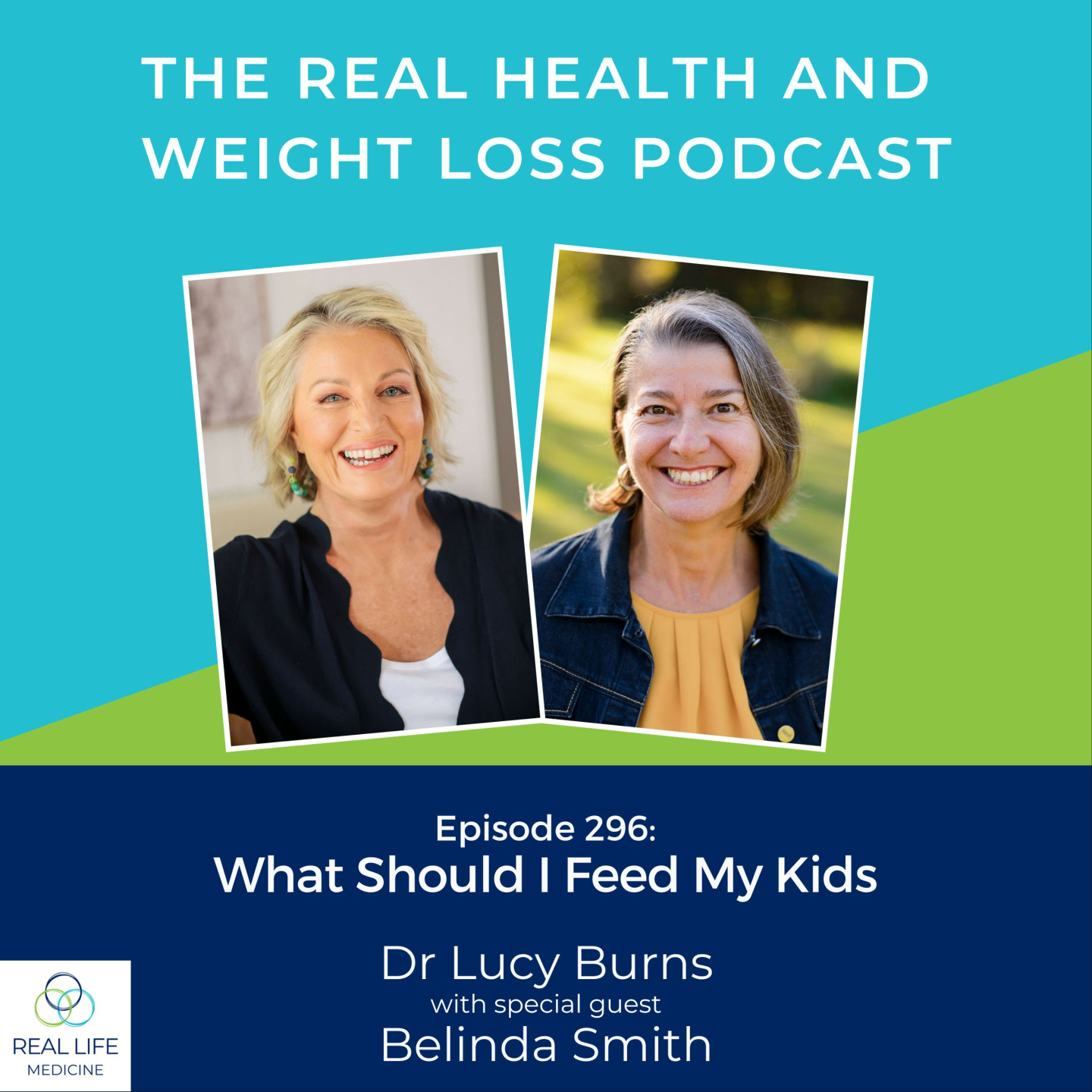
Episode 296:
Show Notes
Dr Lucy Burns interviews Belinda Smith, a passionate children's food advocate and founder of The Root Cause AU, who has spent 13 years fighting for better nutrition in schools and homes across Australia.
Belinda's Origin Story
Belinda's journey began when her husband was diagnosed with postnatal depression and a forward-thinking psychologist advised him to look at sleep, exercise, and diet. Removing gluten dramatically improved both her husband's and daughter's mood regulation, and she discovered her family's "cooking from scratch" actually relied on ultra-processed formulations like Maggi mixes and jarred sauces. Her daughter's teasing at school over her real-food lunchbox — leading to her refusing to eat at school — sparked Belinda's public advocacy work.
The Scale of the Problem in Children
- 45% of Australian children now have one or more chronic conditions
- 99% of children have at least one ultra-processed food in their lunchbox daily
- 47% of children's overall energy intake comes from ultra-processed foods
- Average primary school lunchbox contains 2.2 packaged foods with 10+ ingredients each and about 4 teaspoons of sugar
The Science Linking Food to Mental & Cognitive Health
- 60+ peer-reviewed studies (Lancet, JAMA, Nature) link food directly to learning, behaviour, and mental health
- 22–48% increased risk of depression and anxiety with consistent ultra-processed food consumption
- 24% increased association of ADHD-like symptoms with ultra-processed food consumption (not causation — but dietary improvement can reduce symptoms)
- 28% decline in learning and cognition with consistent ultra-processed food intake
- Research by Felice Jacka shows the hippocampus actually shrinks with poor diet — but neuroplasticity means real food can help it recover
Big Food & Systemic Barriers
- Food companies strategically sponsor school sport (e.g. Milo/cricket), using what Dr Lucy calls "the tobacco technique — get them young and you've got a customer for life"
- The Australian Health Star Rating system is misleading — it compares products within the same category, so sugar-laden muesli can outscore a block of cheese
- Food companies lobby both sides of parliament, making meaningful legislative change difficult
- "Healthy Harold," the well-known school health giraffe, is funded by Sanitarium — not an independent program
Language & Mindset Around Food
- Labelling foods as "treats" or "snacks" implies the rest of the lunchbox is unexciting or inferior
- Rewarding children with lollies for correct answers or sport performance normalises ultra-processed food as something special
- Belinda advocates calling food "friendly for your one body for life" rather than "good/bad/junk" to remove stigma and emotional charge
- The "Let Them Theory" (Mel Robbins) is a useful mindset for parents: model the behaviour without forcing it, and let kids find their own way
Connect with Belinda Smith
- Instagram & Facebook: @therootcauseau
- School program inquiries: therootcause.com.au/mfwf
- After School Snack Guide: therootcause.com.au/go/as-snackguide/
Episode 296:
Transcript
Dr Mary Barson (0:04) Hello, my lovely friends. I am Dr Mary Barson.
Dr Lucy Burns (0:09) And I'm Dr Lucy Burns. We are doctors and weight management and metabolic health experts.
Both (0:16) And this is the Real Health and Weight Loss podcast!
Dr Lucy Burns (00:21) Good morning, lovely friend. I'm without Dr Mary today, but I have a spectacular guest in her place. I am super excited, and honestly, we have so many shared values and goals. She works really in the child nutrition space and is an absolute trailblazer, pioneer in the—you know, what I would probably call the battle of big food and big everything—but, you know, she herself has a big voice as well. So I am super pleased to welcome Belinda Smith. Bel, welcome.
Belinda Smith (00:55) Thank you so much for having me and, you know, getting to share with your incredible audience. I'm a 57-year-old mum of two, fairly and squarely now post-menopause, and, you know, if I forget things through this, that would be because I only got six hours sleep last night instead of my normal eight, so I must apologise. Oh, menopause brain.
Dr Lucy Burns (01:22) Oh, no, you're welcome. Menopause brain. Oh, no, yes, absolutely. Well, look, you know, you're amongst friends here. As you know, most of the people who listen to us are women, and they're usually somewhere between about 35 and 70, so we've got the full gamut of younger mums, mums of younger kids, mums of teenage kids, grandmothers, mums of kidults. I'm the mother of a kidult, two kidults, and now a puppy. So, yeah, there's the whole experience. But, you know, I think your work—in fact, maybe I'll let you talk about your work and what you do, and where you are able to help—I guess, look at particularly, you know, how to feed your kids in the bare bones of it all.
Belinda Smith (02:07) Yeah, thank you. I guess where I started with this, I was a 42-year-old. I had a pretty full corporate life, and I left to become a mum. I had a five-year-old daughter and had just given birth to my first child, my second child, and not very long after that my husband was diagnosed with postnatal depression. And, you know, we're talking about 15 years ago, and his psychologist was pretty forward-thinking for back then. She actually said, "You need to look at sleep, exercise, and what you are eating," and I was like, "What do you mean what I'm eating? Like, I cook from scratch." That was when I actually learned I was cooking from scratch with formulations like packets of Maggi mix or, you know, like those jars of sauces. And so, very quickly, I realised that I was not a cook-from-scratch kind of person, and that my lunch boxes that I was sending my daughter to first year of school with were dehydrated potato sticks and, you know, things like that.
Dr Lucy Burns (03:23) But you know what, it's not our fault. Like, I'm the same. You know that book—in fact, there's not a book, a whole franchise on the Four Ingredients recipe book—and it's actually not four ingredients. It's four products, each with 20 ingredients. It's actually an 80-ingredient book. So I think, you know, there’s no—it is tricky. What we got taught was an ingredient is not an ingredient necessarily.
Belinda Smith (03:51) No, no. It's like what you and I were talking about before, about, you know, these things are industrialised formulations. But I guess that was 42, husband postnatal depression, new baby, child in kindergarten.He was already anxious, you know, and we discovered very quickly that my husband's ability to regulate his moods was directly correlated to his eating of gluten. And so we went gluten free. And what I actually discovered, purely by accident of having family portraits done, was that my daughter wasn't celiac, but she was highly affected by gluten. She had, like, purple rings under her eyes. And when we got rid of gluten after months and months, her ability and my husband's ability to regulate their moods totally shifted. And her little purple rings just went. And I, I guess the work that I'm currently— that I've been doing for the last 13 years, which is really about raising awareness about the power of food and what's in my food, because that's what I learned. Like, there's things in these foods that we have no idea. I fell into this work because my daughter started getting teased at school about her lunch boxes. So going back 15 years, a kid with a steel bento lunch box that had no sandwiches in it, no packaged food. She bore the brunt of a lot of teasing, and she stopped eating at school. And I would pick her up in the afternoon, and she'd be shaking. And then I finally discovered that it was because she was getting teased. So her teacher, fortunately, was health conscious, and she said, "Why don't you come in and talk to the kids about it?" So I created some quirky experiments because my background was in training, and I wanted to make it fun. And the next day at school, I had parents coming up saying, "Whatever it is that you said to my son or my daughter, like, it's totally shifted. They've been pulling things out of the pantry and reading the ingredients." And I guess that spurred me on to actually go. When kids have fun with food—I always say food's a fun experiment—when they have fun with food and they understand the connection about what it means to their body, their brain, and even to the planet, then they want to work with us parents, rather than us saying, "Eat your broccoli. No, you can't have that." They actually want to work with them. So as I started to do that work around Sydney, we decided that we were going to sell up and travel Australia. And we purchased an old coach, turned it into a mobile billboard to promote children's health. And we traveled around the country for two and a half years, raising awareness about, you know, what's in my food. And we went into over 90 schools around the country. And that's my signature program: the Mad Food Science Incursion that we run at schools. That's now morphed after all these years into a partnership program, where we work with the school rather than just go in for a day. We work with the school across a whole year, and that's our Making Friends with Food partnership. And then, you know, it's still that same underlying thing. Like, just, if we don't stand for our kids' health, then who else is going to do it? And it's hard, you know?
Dr Lucy Burns (07:20) Well, you know who'll do it is, you know, sneaky markets who come in every opportunity to sponsor school sport, or Milo will sponsor cricket or whatever it is. There's a big food company ready to sponsor. So benevolent of them. Aren't they so kind?
Belinda Smith (07:39) Yes, they are very kind, you know, because they give one, you know, voucher and most people have two to three kids. So if one kid gets it, you've got to buy it for the other two.
Dr Lucy Burns (07:49) Ah, it is the, it's the tobacco technique, isn't it? Get them young and you've got a customer for life. Do you get much pushback from people who, I guess, feel, for many reasons, maybe feel defensive or feel you're too, you know, virtuous or rigid or not realistic, or any or all of those things, or any, all of the above?
Belinda Smith (08:11) Yes, there's been a lot of that over the years. You know, I've been trolled. I've been called, you know, lunchbox police. I've been, you know, told that my kids must hate me and, you know, all sorts of things. I've even been, had a high-profile Australian dietician come at me and make a reel talking about, you know, real food. And she puts up packets of potato chips, you know, this is real food. And so all of those times, particularly the trolls in the very early days, I was so inexperienced with that. Like I, I remember we were travelling Australia in our first year, and I had been down in Deniliquin and we had run a family event where, you know, I was helping parents and kids work together to look at common foods that they were eating. And a young boy discovered what was in one of those pop-top drinks. And I innocently went to bed at 10 o'clock at night, had posted on social media about what had happened and about how the boy learned about it. The next day I had over 10,000 followers, like, just from that post, but I got trolled so badly by, you know, it was very clear. I had a few people in my court who were experienced in this, and one of them, I will be forever grateful, reminded me that these people get paid by companies like, well, food manufacturing companies, to do that kind of stuff—to discredit us. So yeah, there's been a lot of it, but one of the things that I do take a lot of pride in is the fact that there's a lot of people, probably people in your audience, who are going up against it all the time. And they actually feel like they're supported and vindicated because someone's using their voice to say these things. You know, like I often get people say, "I don't want to be that mum." And I'm like, "Be that mum, you know, be proud, be that mum." And I guess that's what I really, you know, I can deal with the words that people say. It hurts, it stings, but, you know, what do you do? I look at my own kids and I say, "I could give up, and what am I teaching them?"
Dr Lucy Burns (10:30) Yeah, yeah, absolutely. And I think that's, it's good to have had that reminder from a friend that, yes, trolls are paid. And, you know, I remember going along to an event and sitting next, I was at a table of dietitians. I felt like an odd person out. And they were young and they were really lovely people. But I, it was my first realisation that they got paid by companies to do posts. And this was again, before you had to declare that you were sponsored, you didn't have to declare. They just, oh my God, the conflict of interest is, you know, so it's not just the big players, it's also little players in there and just, they are strategic big food companies, really clever, strategic, relentless, and they will stamp on somebody who's, who potentially threatens them. So I guess for you, it's great. Trolls mean you're making a difference, like they're, they're seeing it. Yeah, exactly.
Belinda Smith (11:29) And, you know, and I've sat in on parliamentary committees where I've, I've heard food manufacturers giving evidence and aren't we wonderful because we provide all these jobs and we get, you know, like, you know, put all the taxes back and I'm like, but what are you costing? Like, what's the health burden?
Dr Lucy Burns (11:52) Oh, absolutely. And on top of that, they lobby both sides of parliament, both political parties. So they, you know, it's very hard potentially for a political party to pass legislation that may influence the bottom line of these companies because they will withdraw their donation and that will mean the other party will win. And it's like, ugh.
Belinda Smith (12:18) That, I guess that's why, what's happened in America, not that I agree with everything, the way that, yes, but the fact that they, a country of that power has actually come out and said, you know, ultra-processed foods are dangerous is actually extremely powerful. And I'm, I'm actually still sitting back, maybe I'm a bit sceptical, but waiting to see what, you know, happens with our dietary guidelines that have been under review for a couple of years and supposed to roll out at the end of 2027. I'm interested to see, I haven't seen, and maybe I've missed it, a statement about, you know, whether we're looking, yeah, okay, I thought I might've been missing it because I don't, I don't dwell on the media. When I first started this work 13 years ago, the big focus was on obesity, childhood obesity, childhood obesity. We've gone way past that because it's not even overweightness anymore. You know, we have kids that are malnourished because they're just not eating appropriate foods that support their health. And the conversations that, you know, so I guess I wrote my book in 2018, 2019, after sitting in on a parliamentary committee, having my work put in front of and mentioned in parliament, only for them not to consider anything. Back then I was talking about the levels of processing and, you know, additives. Still we're not there. And we're still dabbling over here, but health has moved. Like we've now got 45% of Australian children have one or more chronic conditions. I just can't wrap my head around that.
Dr Lucy Burns (14:20) Yeah. Yeah. And it's really interesting. I mean, the evidence, as you said, is very clear on the dangers of ultra-processed food. There's lots of work done by, you know, Felice Jacka and her gang on food and mood. It's really, it is really clear that food, you know, our saying real food is medicine, but it's so interesting because you get even pushback from health professionals who will say, oh, don't demonise food. You know, food isn't medicine. Medicine's medicine. Food's just food. You know, and like you're saying, they're holding up packets of chips going, this is food. It's like, well, it's a food product. It's not food. And I think the trickiest bit in all of this is the inequity we have with the ability for people to access real food because of cost or where they live or availability. And I'm sure you're a fan of Chris Van Tulleken's book, Ultra Processed People. Yeah, totally. Totally, like the best book ever. And he talks about, you know, the food deserts where there's no fresh food, even in the suburbs, it's all processed food, you know, takeaways, all of that stuff.
Belinda Smith (15:30) Yeah. Yeah. It's, it's quite like the way our governments actually allow these companies to firstly set up, you know, like this place in Sydney, like out of Western Sydney, it's like diabetes corner. You know, they've got Hungry Jacks, they've got Maccas, they've got Subway and like all in this thing. And you can sit there in your car. And we did this when, you know, going back to 2018, I'm sure it's changed a bit, but sat there in our car. And at three o'clock in the afternoon, you would start to see the queues lining up of people in their cars, picking up food after school. And our health is shaped by our environment. That is not, you know, it's not a parent's fault. I mean, it really annoys me. Yes, it's a personal choice, but when you're tired, you're exhausted, you've got kids nagging you, you've got these companies giving them sports vouchers because they played well at cricket that weekend, you know, like, it is really, really hard. You know, we don't even have a microwave. And one of my incidents that I remember the most was when a Star Wars movie came out many, many years ago, and my little, my son's now 15, so he probably was maybe four or five. And he wanted microwave popcorn because of the Star Wars character on the front. And he was wailing, he was bawling, and, you know, like screaming. And I'm like, we don't have a microwave, we're not having it. And a little old lady, you know, an old grumpy old man told me I should smack him. And then a little old lady gave him $5. And I was, oh, you know, we are really up against a lot. So, I guess for everyone that's listening, and you're in that space, we're doing the best that we can. And we're all like, like you, it's not about being perfect. It's not about, you know, don't have... Yeah, never, ever. Yeah, it's, you know, like, let's live life, but also, you know, find the ways that we can make it easy for ourselves and our kids to, you know, get by. And I guess one of the things that I'm really working on this year is trying to get our educational leaders to think about food as an input to well-being. Because at the moment, a lot of them balk because they don't want to have problems with their parents, so we can't tell them what to pack. They're totally oblivious to their role-modeling behaviours based on what they have in the canteen, based on giving out super dupers as rewards. And, you know, there's so many things that a school can do that doesn't involve telling a parent anything. So, I'm trying to raise the conversation this year about let's start thinking of food as an input to well-being. It's actually, it's not peripheral, it's actually a foundational piece. Unless we start looking at what we are doing, then we're missing that foundational piece. Food is information. We need them to see that food is information to their body. It affects their body, their brain, their sleep, you know, their mental health. And when we can educate people from that level, we can remove the stigma and the judgment, you know, and it's a big reason why I think the language that we use is particularly important. You know, like lunchboxes have become about snacking, you know, and we know we've been collecting data since 2019 from over 24,000 lunchboxes. We know that on average, this is primary school I should say, on average 2.2 packaged foods, over 10 ingredients per packet, so they're squarely in the domain of ultra-processed foods, about four teaspoons of sugar. You know, if we think of food as an input and as information to our body, what information are we feeding our, you know, like our biological condition? Are we setting our kids up for learning and behavior? So I think the language that we use is even—stop labeling things as snack foods and treats, because what are we saying when we say, you know, like we're putting a treat in their lunchbox, like a little Cadbury chocolate bar or a Mars bar, we're putting a treat in there. What are you saying about the rest of the food that we're putting in there? And I guess schools only give kids on average about 15 minutes to eat lunch. So if you've put a snack or something that you've made fun and exciting in there, what do you think they're going to gravitate to first? They've just been locked up for three or four hours not being able to talk to their friends, and they've come out and they have to sit and eat in a short time before they go off and eat. There's obviously the convenience of packages, but there's ways that we could look at those even. How do we make them a better input for our kids? How can we make it friendlier for them—we say their one body for life, you know, like how do we set them up with foods that are friendly to their health?
Dr Lucy Burns (21:11) I love that. And you're right. I mean, honestly, I hadn't thought about the idea that if this is a treat food, then all the rest is obviously untreat food. Or if this is a sweet treat, then the rest of it is, you know, non-sweet garbage in their mind. We spend a lot of time undoing the treat word because it is also tied then to reward, which you've mentioned as well, that, you know, food becomes a reward. And I remember when my daughter was young and there was some sort of school, a maths lesson, and they had to answer, you know, a times table. And if you got the right answer, you got a jelly dinosaur thing. It was like, what? We don't need to reward kids with lollies for getting the right answer. The right answer is the reward. Like, that's enough. And even things like basketball, we used to get oranges at halftime. And now they get lollies. And at the end, it's lollies, lolly snakes. They don't need it. They just don't need it. And it was, there was, I mean, Jamie Oliver, as you know, I'm sure you know about all of that, that entire series as well. And again, he did this great experiment where there was, you know, lots of pushback from the school going into American school canteens. And, you know, the offering plain milk versus chocolate milk. Well, no one wanted the plain milk when the chocolate milk was on offer, you know, but if you took the chocolate milk away, there was maybe a bit of grumbling. And then over time they just started having the plain milk. So real food, well, I mean, we call it real food, but real food can't compete on a taste-by-taste with ultra-processed food. And so it's really tricky. We have to minimise, I guess, the exposure to the ultra-processed food, crowd it out with real food so that they can at least have a fighting chance.
Belinda Smith (23:07) Yeah, definitely. And that crowding out is the approach that we actually talk about. Like we, when we're trying to empower kids, our kids are far more conscious of environmental impacts than we ever were. But it's also a conversation that parents and schools feel more open to have, about the environmental impacts for food. So we talk about foods that are friendly for our one body for life and our one planet Earth. So, you know, if you think about it, we do a bit of a demonstration where we empty, like, popper boxes out on a floor and we'll talk about, you know, how friendly these are to the environment? How long does it take to break down, you know? And then we can talk about, oh, there's seven teaspoons of sugar in one of those little drinks, you know? And the difference between a beautiful orange or an apple and the fibre that slows down the sugar that's in there compared to all the fibre that's been taken out. So if you're having troubles at home with your kids about food, start to have conversations with them about the environmental impacts because they'll often pick up on that more. I remember when we were travelling Australia, one of our, I guess, classes, homeschooling classes, was that we took our kids to a turtle hospital up in Queensland in Townsville. And they had those massive, beautiful turtles that they were rehabilitating because they had pulled out plastic bags and things out of their throat. And they're the conversations that we can say that we can change. You know, if you've got two packets today, what would be friendlier for our one planet Earth? You know, could we take one of them out and bring an apple instead? You know, like that kind of conversation. The gift that I got from that dietician that kind of trolled me was that it actually really made me think about labels of food because I used to talk about real food and processed food. And, of course, she was going to town because there is no such thing about processed food. It's all just food. And being totally transparent with everyone that's listening out there, I'm not a dietician. I'm not a nutritionist. I'm not a doctor. I'm actually just a mum who has become very, very passionate. I've done all my health coaching certification, but I read research papers relentlessly. And the research papers still refer to real food. So it really, really made me step back and go, well, how can we do this better? So yeah, our main school program became about making friends with food, all kinds of food. And, you know, which ones are friendlier for our one body for life, which ones are, you know. And so removing those labels, because when we have labels like, you know, that's a snack food or that's junk food or that's good food, we attach emotion to those words. But when you just say, that's a carrot and that's a chocolate, you know what I mean? So what is it that we can do that can sort of fit into helping body positivity, but also going beyond, you know, what our dietary guidelines are saying? I mean, that's one of our biggest challenges in schools is that we don't actually talk about the Australian dietary guidelines, because we just talk about foods that support us and foods that don't. They're all, you know, part of the dietary guidelines.
Dr Lucy Burns (26:52) But, well, I mean, the most difficult thing with the dietary guidelines is that, again, food companies are very clever and they, you know, they make foods that fit within the dietary guidelines technically, but they're ultra-processed and they'll, you know, slap high fibre and now, you know, high protein, high fibre. They're the two buzzwords for 2026. And now everyone's fibre maxing and protein added to everything suddenly turns something that's perhaps not body-friendly into what somebody might think is. And this is the confusing thing, I think, for parents, is that they don't know what is healthy and what's not healthy in a supermarket.
Belinda Smith (27:34) Yeah, and don't even get me started on our health star rating system, that's supposed to make it easier for people. It is actually misleading, because yes, it's supposed to be comparing two products in the same range, but the way it's calculated is, you know.
Dr Lucy Burns (27:52) And nobody knows that, like they think everyone knows that. But what it means is that you get, you know, some muesli that's still got loads of sugar in it, but it's got, you know, it's low fat and it's low salt. So it's got high fibre, so it gets five stars. And then you compare it with a block of cheese, it's got two stars, and they go, oh, obviously the mueslis. But you're not actually, you know, you're not comparing apples with apples.
Belinda Smith (28:17) I guess it's now overwhelming. You know, there's over 60 peer-reviewed studies from journals like Lancet, there's, you know, American Medical Association Journal, you know, Nature Journal, which really show that food is directly linked to learning, behaviour, and mental health. And the alarming thing is, we know that 55% of our average weekly grocery spend now is on discretionary foods, like we still call them discretionary foods, but most of those are actually ultra-processed. And this, all of these studies are actually showing, you know, like 22 to 48% risk of increased depression and anxiety when we have, like, consistent consumption of ultra-processed foods. Now let's just unpick that, because consistent for my mind would be saying, well, that's something that consistent, I have it every day. We know that 99% of children are having at least one ultra-processed food in their lunchbox a day. We know that, you know, 47% of their overall energy intake comes from ultra-processed foods. So if you're a mum that's out there, and you've been really doing your best to feed your children foods that are grown in nature, know that, yes, it's hard work, and you might be getting pushback. But the science is very, very clear. That doesn't mean, you know, like, don't pop one in, you know, every now and again, or when the wheels fall off, which happens often. But just know that you're actually doing things to protect your child's mental health. You know, there's now 24% increased association of ADHD-like symptoms with ultra-processed food consumption. So let me just be very, very clear, because I did get attacked in social media when I shared that stat recently in the study. This isn't saying that food is causing ADHD or ADHD-like behaviours. What it's actually saying is that if you have a child that has ADHD or is experiencing ADHD-like symptoms, paying attention to what they're eating can improve those conditions. It's not saying that it's causing it. Like, I just need to be really clear on that. And then there are studies that actually show 28% of learning and cognition actually declines when there's consistent consumption. So, you know, our kids are in their formative years at school, designed for learning. And yet it's showing, you know, I love Felice Jackal, you know, like her, she talks about how the hippocampus actually is shrinking. They can see that. The beautiful thing is, we now know it's neuroplastic. And the more that we feed it nourishing foods from nature, the more it will replenish. But right now, you know, it's actually shrinking.
Dr Lucy Burns (31:33) Yeah, wow. It's amazing. I think what you just described, then we use the garden analogy for a lot, particularly with the gut microbiome, but it's the same with the brain. If you look after it, or if you don't look after it, it withers away and dies, but you can rejuvenate it. And if you pay attention, start watering it, start feeding it, nourishing it. It's really, I mean, life is just about nourishment, isn't it?
Belinda Smith (32:00) Yeah. And it's not just, you know, food is one element, but nourishment in terms of I know you love talking about getting outside in the sun and the difficulties that you've had to go through recently to actually do that.
Dr Lucy Burns (32:13) Yeah, I know, to do something that's seemingly simple is.
Belinda Smith (32:18) Yeah, right. Yeah. And so there's a lot more to it, but, you know, it really is — food is something we eat every single day, multiple times a day. And so one thing that I'd love to say is that you get a lot of opportunities throughout the day. Don't put all the pressure on the dinner table. Don't put all your pressure on getting the veggies into them at dinner time. Let's start to think about how, on the weekend, you can reposition breakfast to include vegetables, for instance, because imagine if they already get one serve of their vegetables at breakfast time and you don't have to try to put another like, pour on their plate at dinner time, and you're not stressing about that. So give yourself a break and spread it across. Don't put all the pressure on yourself at the end of the day when everyone is exhausted.
Dr Lucy Burns (33:14) Ah, I know. And all your kid wants to eat is white pasta with no sauce. It's like, oh, all right. We've all been there. Yeah, we've all been there. We've all been there. So Belle, you have programs to help people with lunch boxes or dinner ideas in real food for their kids. Tell us a bit about those.
Belinda Smith (33:32) Well, I'm very much like you and Mary. It's all about — we can't hold any more in our head. So it's about little systems. So, you know, I've got a breakfast reset program, which is really a very simple cook-along where, within an hour, I will help you make a week's worth of breakfast. You know, it's really, really simple. The reason why I do that is not for you to be pushing these on your kids for breakfast, but to nourish ourselves because we will often pick up the corners of the toast as we're rushing out the door, not have packed our own lunch box, and get to three o'clock in the afternoon and realise we haven't fed ourselves. So this is about an investment of one hour of your time that will make sure that while you're packing the school lunch boxes, if you really don't have time to sit down and eat, you'll be showing your kids that you're eating breakfast as well. Because if you're saying to them breakfast is important before going to school, but you're not eating breakfast, why would they believe us? Yeah, absolutely. Yes. Yes. And one of the beautiful things about starting with breakfast is that not only are we nourishing ourselves, but your kids start seeing it. So my kids loved eggs until they were four, both of them. Now they're 19 and 15. And my son has slowly started liking the little quiches that I make that I have for myself, because in food tech at school, he learnt to make them. So now he sees me eating them. And so now I make my tub and he's helping himself at 15, comes out, gets them out of the fridge, and helps himself. That's become his afternoon snack after school. So don't underestimate the things that we do and role model how powerful it is. And the reason why I call them "reset" is it's all about, you know what, you're going to be really good. And then the wheels will fall off. And don't beat yourself up. When you get ready, reset and just start again. Invest another hour and, you know, set yourself up. So I've got that for breakfast. That's a really simple program. I've got a five-week lunchbox reset, which is really, you know, you could sit down and watch all the education modules in three hours, but they're like little 15-minute videos. You could do one a week or whatever. And it's about how do you set up a system so that not only can you pack your lunchboxes for your family, but your kids start to pack it. So imagine a world where you didn't have to pack lunchboxes, right?
Dr Lucy Burns (36:12) You know, I felt a bit mean about this, but I've decided I don't need to feel mean anymore. I stopped cooking for my kids when my youngest was 16. And part of the reason was that, in fact, it might've been earlier than that. In fact, it was earlier than that. It was because I had my own, you know, revelation and changed from my ultra-processed, carbohydrate-laden lifestyle to my low-carb, whole-food-laden lifestyle. And they're vegetarian and they're fine. But I didn't want to cook two dinners anymore. And I just decided, you know what? I've done dinners. You can eat what I'm going to cook, enough. If you want to eat what I'm cooking, that's fine. You can have that. Or there is food — ingredients, like actual ingredients — and you can cook your own, and you know how to cook. Now you've learned it at school. And so you have to cook your own dinners, which people were horrified by. But honestly, my kids know how to cook. They feed themselves. They eat well. It's a real gift.
Belinda Smith (37:15) You know, like it really is a gift, and a gift to ourselves, because there's plenty of research that shows that food is the biggest stressor in a family household. It causes problems with marriages because partners aren't on board, and we get hung up on it, and we want to control everything. And then, you know, like there's so much, like so many things, which is actually why in every program I do, I always have a little modular mindset because it's a bit like — I don't know if anyone's read that Mel Robbins book, The Let Them Theory. Let Them Theory. Yeah. Yeah. Yeah. So it's like, you know what? Let them. You know, if they don't want to eat what I eat, I'm going to still show up and cook what I'm going to cook. And, you know, there'll always be something there for them. So they're not going to go hungry, but let me show up how I want to show up for my own health and knowing it's good for their health, but not, you know, not push it down their throats.
Dr Lucy Burns (38:14) Yeah. And not get emotionally invested if they reject your food.
Belinda Smith (38:18) Yes. Yeah, definitely. I just actually want to share a letter when my daughter finished high school, the year after she went to America as a summer camp counselor. And I just want to read what she wrote in the letter: "Also, I'm forever grateful for your cooking skills. I've never met anyone else who is so consistently as well-fed as I am. And that's a massive part of what is keeping me thinking about America. I won't be able to eat your food. The knowledge that you've taught me about food and cooking is invaluable. And I hope I can share it with my children one day too." So, I mean, mind you, this is the same girl who, after two years at summer camp, sat at the dinner table last night after eating delicious crumb chicken, greens, and everything that my husband had cooked. And she said, "What I wouldn't do to have a bag of chips with Red 40 in it." I just want you to know, mums, grandparents, the best thing that you can do is show up the way that you know that you need to. And when your kids, they will go off, they're going to see this food everywhere else, they're going to do it. But just know that in the home, it's your narrative. And that's the gift. I know that when she moves out of home properly, she'll get to a point where she recognises, she understands her body enough. She's had years of talking about how her body feels.
Dr Lucy Burns (39:55) I totally agree. And my, look, when my kids were teens, I didn't talk about food. I didn't talk about it. Like we just ate real food. I didn't criticise or comment on any of their whatever stash they had in their rooms or in the pantry or whatever. You just don't need to make a big deal about it. And it's, again, just continual modeling on foods that make your body feel good or foods that make you strong, or foods that make you think clearly, or whatever language works. I think that is the key. And then as they're now adults, they, yeah, of course, still have junk food, but they're not in the proportion of kids that have 80% of their diet as ultra-processed food.
Belinda Smith (40:41) Yeah. Yeah. A hundred percent. I mean, I think it's just important that we all, that we're doing the best that we can at any given time and recognise that we're not robots. And even look, AI is robots. They get it wrong all the time. Right? Yeah. So, um, you know, believe in yourself, focus on everything that, you know, you and Mary talk about, which is just eating the foods that are nourishing to our body and brain, that reduce inflammation, because our body gets inflammation from so many other things like sleep. Hello, me, not moving our body enough. Hello, me, you know, like, so anything that you can do that for yourself, that role models it to kids, and allow yourself to slip up.
Dr Lucy Burns (41:31) Yeah, that's wonderful. Um, so Belle, if people want to connect with you, follow you on socials, where do they follow? What are they looking for?
Belinda Smith (41:39) It's The Root Cause. So T H E R O O T C A U S E A U, because there's a heavy metal rock band in Britain called The Root Cause. Right. Um, so yeah, the A U, and you'll find me on both Instagram and Facebook. I should get better over at LinkedIn one of these days.
Dr Lucy Burns (41:59) Ah, it's too hard to do it all. Don't worry. I do the same. Yes. Too many balls. Tiktok LinkedIn. Yes. It's hard to be good at everything.
Belinda Smith (42:08) So all my websites, therootcause.com.au. And this top part is really about, you know, joining up to get my fortnightly newsletter, which is just tips that I talk about, life in general. I'll probably talk about the Red 40.
Dr Lucy Burns (42:22) Yes, I've signed up.
Belinda Smith (42:24) Ah, thank you. Yes. The ebook needs to be updated, but we won't go there. But down the bottom, if you're interested in Breakfast Reset or Lunchbox Reset, then there's information there. My Dinner Reset program is, um, a little bit, uh, I've kind of opened that and we do it as a challenge together. So that's currently not open, but you can, you know, pop me an email and let me know if you're interested in doing that. And that's, again, it's all about the systems. We don't need recipes. I mean, I think if everyone opens their phone and has a look at the tabs that are open, you will see lots of recipes. We don't need recipes. We just need to know what are the things that work for my family that I'm happy with the ingredients, and I can use those ingredients across multiple meals. Keep it at that. And then occasionally bring something, you know, like just anyway, that's what Dinner Reset's about — just helping you set that up. Yeah.
Dr Lucy Burns (43:19) Yeah. Wonderful. Wonderful. Uh, well, you know, I salute you. Thank you for all the good work you're doing. Raising awareness, uh, around food in schools is massive and, you know, I can't imagine how both exciting and joyful it must be mixed in with a little bit of trepidation from, you know, the pushback of the trollers, the, all of the vested interest groups. But I think I love that reframe that means you're making a difference. So yay to you.
Belinda Smith (43:48) Yeah. Thank you. I should actually, I apologise, should say if anyone is interested in, um, having us come to your school, on the website, you can go to therootcause.com.au/ M W making friends, M F W F making friends with food. And you'll find the information there and you can fill in an inquiry form and we'll reach out and chat to you about how we might go about doing that.
Dr Lucy Burns (44:13) Oh, that sounds great. And we'll put the links to all of these in the show notes. So if you're driving, don't stop and try and look at it, but just know that you can go to the show notes and all of Bel's links will be in there. And yes, teachers, if you're out there, or if you're a mum at a school or a dad at a school, and you think that it would be helpful for your school to have this, lots of schools will have heard of Healthy Harold. And he's been, Harold's been around for a long time. He is funded by Sanitarium. So he's actually Sanitarium's giraffe. He's not an independent giraffe. He's a giraffe, isn't he, Harold?
Belinda Smith (45:50) Yes. Yes.
Dr Lucy Burns (45:51) Yes. So he's not an independent giraffe. So just, you know, just keep that little bit of information in your back pocket because it's always just something to think about.
Belinda Smith (45:00) Yeah. Yes, it is. Thank you for sharing that.
Dr Lucy Burns (45:04) You are welcome. All right, gorgeous woman, thank you so much for being on. And for all our lovely listeners, have a spectacular week. And may your life be easy this week.
Dr Lucy Burns (45:19) The information shared on the Real Health and Weight Loss Podcast, including show notes and links, provides general information only. It is not a substitute, nor is it intended to provide individualised medical advice, diagnosis or treatment, nor can it be construed as such. Please consult your doctor for any medical concerns.