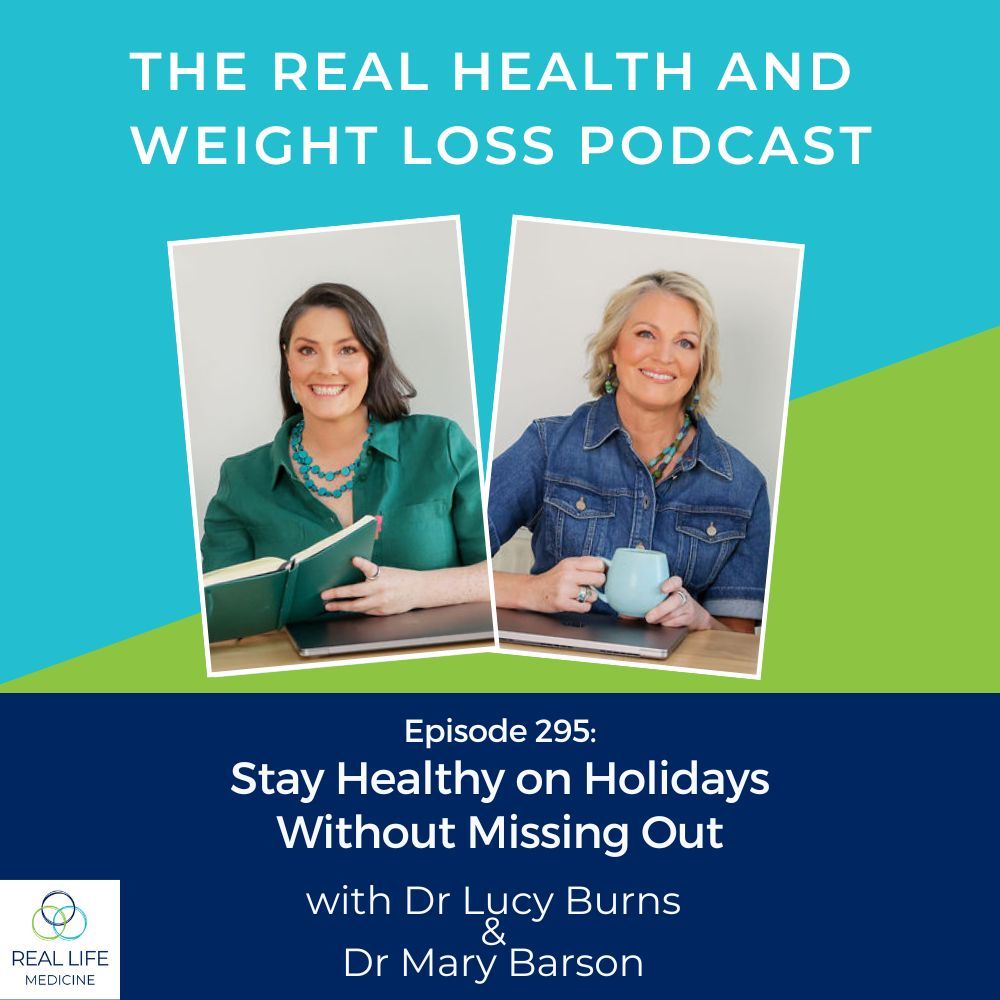

STAY HEALTHY ON HOLIDAYS
WITHOUT MISSING OUT
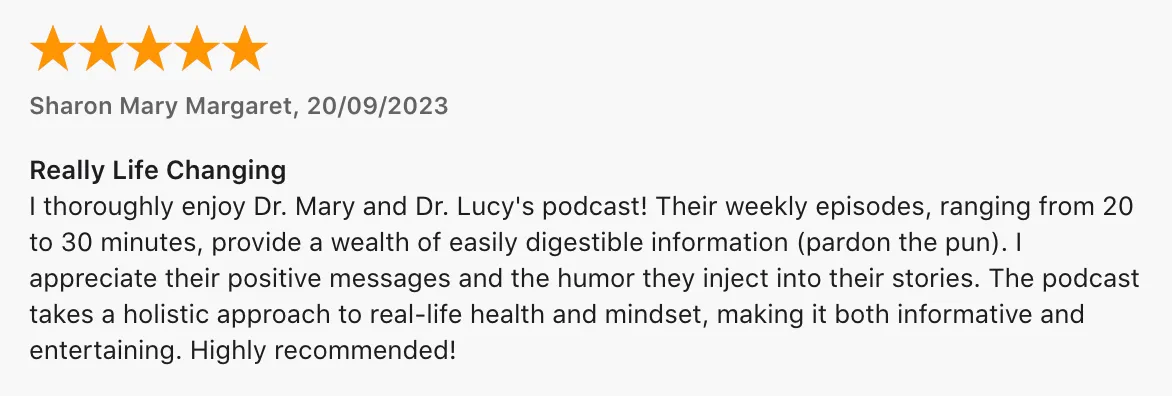
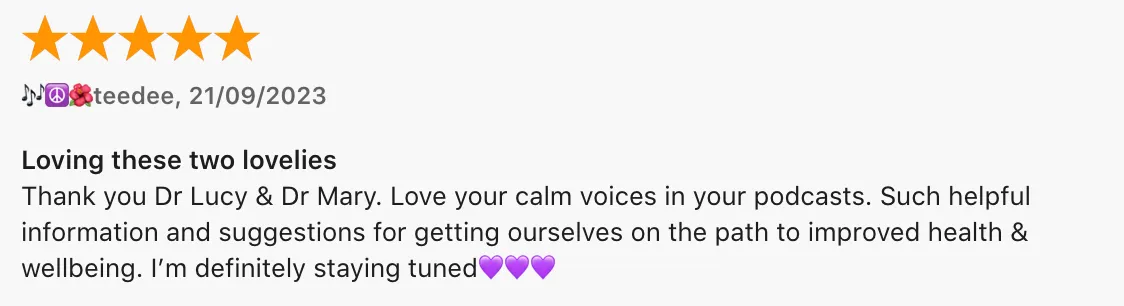
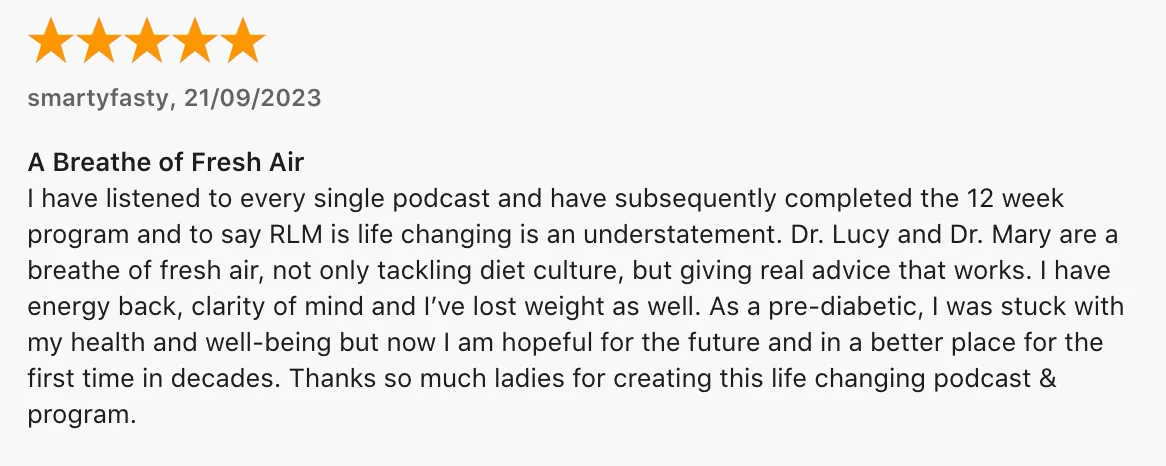
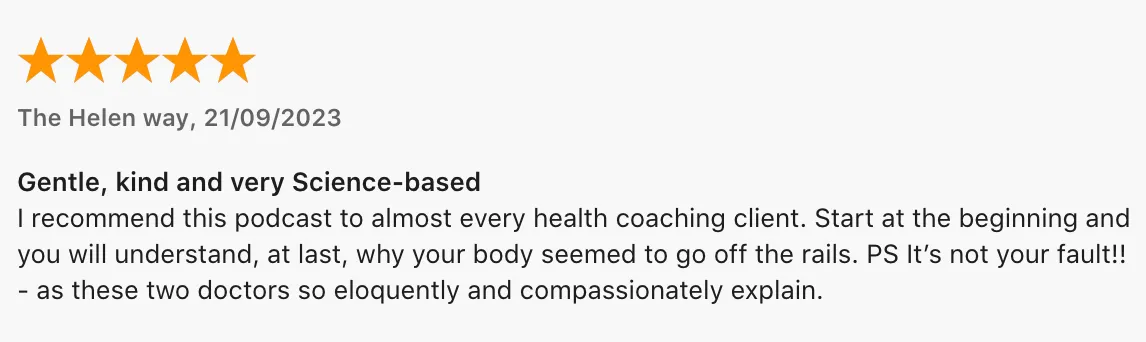
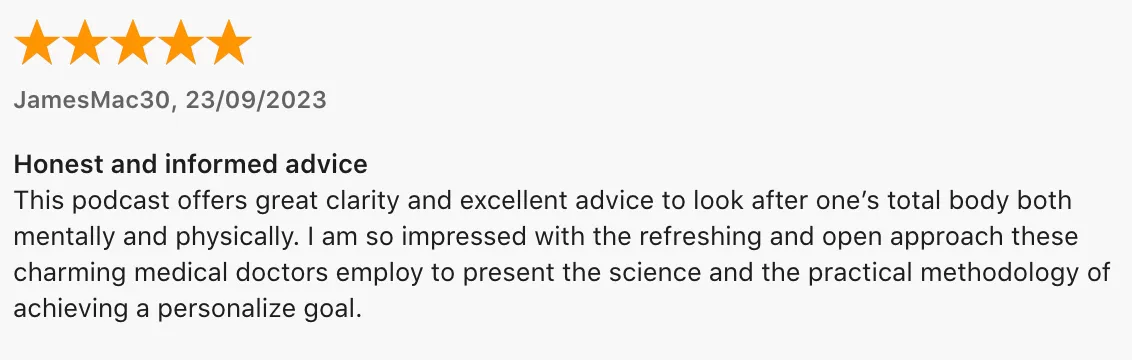
One of Australia's Most Popular Podcasts with Hundreds of 5 Star Reviews

Grab your FREE Ebook copy now!
Have you struggled to lose weight and keep it off?
Start your journey to boost metabolism and transform your body into a fat-burning powerhouse.
Episode 295:
Show Notes
Dr Mary Barson shares her experience from her first overseas holiday in 20 years—a trip to Japan with family—and how she successfully maintained her metabolic health while still enjoying the cultural experience. The episode explores practical strategies for navigating holidays without abandoning health goals or falling into "all or nothing" thinking.
Key Holiday Mindset Shifts
- Holidays are still real life: Dr Mary rejected the old mindset that "what happens on holidays doesn't count" and avoided the perfectionism trap of "if I can't be perfect, I won't even try"
- Food doesn't need to be the star: With fussy eaters in the group, food naturally became secondary to the experiences, which proved beneficial for maintaining balance
- Cultural experiences without excess: Dr Mary enjoyed cultural foods like famous mochi in Kyoto intentionally, but didn't feel compelled to indulge daily, recognising that scarcity mindset ("I can only have this here") isn't actually true
Practical Strategies That Worked
- Flexible framework: Prioritising protein, keeping carbohydrates low, and avoiding excessive snacking provided an adaptable structure that worked in any environment
- Convenience store wins: Japanese convenience stores (7-Eleven, Family Mart) offered fresh salads, boiled eggs, cheese, quality meats, and steamed vegetables—making healthy choices accessible
- Airplane food navigation: Dr Mary picked protein from meals, brought minimal snacks (jerky and cheese), and was comfortable fasting rather than eating poor-quality food
- High activity levels: Walking 20,000-25,000 steps daily was natural in Japan's walking-friendly culture
Avoiding Old Holiday Pitfalls
- No "all in" mentality: Both doctors discussed their previous patterns of using holidays as permission to abandon all healthy habits—Dr Lucy once gained 10 kilos during a six-week Europe trip
- Buffet breakfast trap: Instead of the "get your money's worth" approach, Dr Mary used buffets as opportunities to try new Japanese foods mindfully
- Weight yo-yoing: The doctors emphasised that significant weight fluctuations are problematic because weight gain adds fat while weight loss removes both muscle and fat
Japan's Food Environment
Japan has one of the lowest obesity rates globally, and GLP-1 medication manufacturers don't market there due to lack of demand. The country has implemented systemic approaches supporting metabolic health, including a strong walking culture and widespread availability of healthy convenient foods.
The Outcome
Dr Mary returned home with no need for a "reset," detox, or guilt—just needing to recover from jet lag and seamlessly continue with regular life. Her approach demonstrated that maintaining metabolic health on holiday doesn't require perfection or rigidity, just intentional, balanced choices.
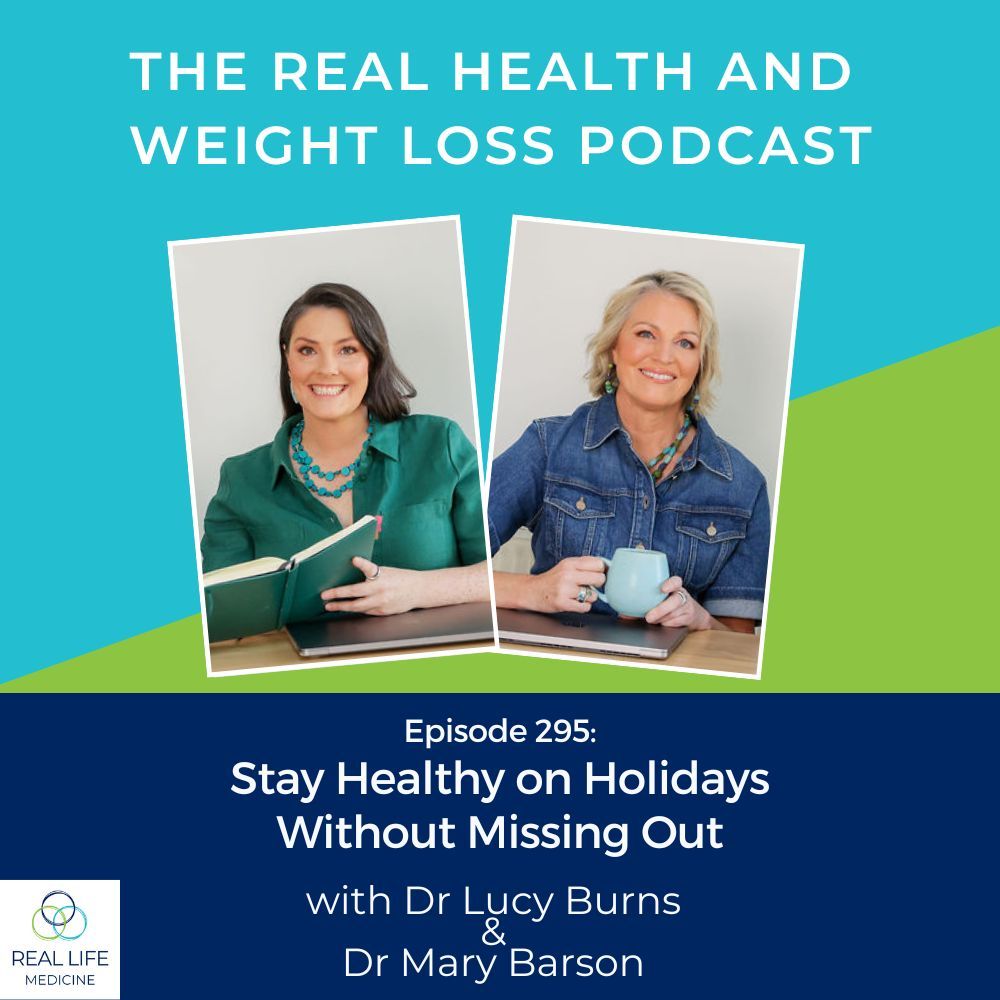
Episode 295:
Transcript
Dr Mary Barson (0:04) Hello, my lovely friends. I am Dr Mary Barson.
Dr Lucy Burns (0:09) And I'm Dr Lucy Burns. We are doctors and weight management and metabolic health experts.
Both (0:16) And this is the Real Health and Weight Loss podcast!
Dr Lucy Burns (00:21) Good morning, lovely friend. Dr Lucy here. I hope you're having a spectacular day. I am super excited to chat with Dr Mary because she has been on holidays, having a wonderful overseas adventure. And it has been so exciting to hear all of her stories. Today, she's going to share some of them with you, particularly around holiday mindset. So, lovely friend, how are you?
Dr Mary Barson (00:52) I am good. Yes, I have just returned back from a trip to Japan. I'm not a seasoned traveler. I'm really not. This is the first overseas holiday I've had in 20 years, really. So it was wonderful and exciting and tiring and hard and stressful and great—all of these things all at once. And one thing that I, on reflection, think I am probably most proud of is how I was able to, by and large, have this awesome holiday and still stay on track with my metabolic health. And not perfectly, but with intention. Doing so meant that I really did have a great time, a really joyful time, as well as a healthy time. Because certainly, in the past, I would have used any kind of holiday as an excuse to just, you know, eat whatever, do whatever, drink whatever, not worry about it, would have this strange holiday mindset that what happens on holidays doesn't count. Or another way that I could have looked at it in the past is, you know, if I'm not perfect, I've failed. So if I can't be perfect, I just won't even try. But, you know, holidays really—they are still real life; there's still an extension of real life. And, you know, for me, my approach to holidays—I want it to work into my real life. I don't want to increase my risk of type 2 diabetes, I don't want to be gaining weight, I don't want to be increasing my blood sugar, just because I've been on holidays. So yeah, that's kind of how I went into it. But not being a seasoned traveler, and certainly having never been to Japan before, I didn't really know what to expect. But, like, you know, what we do, Lucy, what we talk about, it's a really quite a flexible framework—prioritising your protein, keeping your carbohydrates low, not snacking too much, all of these things meant that I had a pretty easy framework to work with. And it was fun. Our approach to metabolic health, the way that our programs work, with, you know, my metabolic action plan—what we do—it doesn't need specific foods, or specific rules, or perfect conditions. And it doesn't have to fall apart when life is stressful, when life is busy, on weekends, at weddings, or on holidays. So yeah, I am proud of it.
Dr Lucy Burns (03:32) Oh, well done. Well done. And I think there's lots of things about holidays that we have mindset around. And some of that, again, has probably come from childhood, you know, where all of a sudden, you're not going to school, you're on holidays, the parents are not working. So there's more, you know, fun activities—you’re going to, I don't know, the zoo, picnics—there's more foods involved. There's just this whole treat mindset, which is not to say that you can't have any, any of that feeling, any of those—and I'm using air quotes—"treats." But it's about not necessarily going all in just because it's a holiday, and going, right, well, everything I ever do, I'm just doing the opposite now, because, you know, I'm on holidays. So, you know, I'm on holidays, I'm gonna eat Coco Pops for breakfast, and I'm on holidays, I'm gonna have McDonald's for lunch, and I'm on holidays, so I'm gonna have, you know, three glasses of wine every day. Like, you don't have to do that.
Dr Mary Barson (04:42) Yeah, there's this added layer of challenge for me, is that I went with my beautiful sister, her hubby, my gorgeous niece, and my two beautiful kids. And we had quite a lot of fussy eaters in that group—me and my sister weren't—but, you know, to varying degrees, everybody else was. So there was this added layer of complexity. And I did not navigate child nutrition as well as I wanted to while on holidays, but I didn't do too badly either. But another thing that the fussy kids did is that they just sort of forced us to put food as sort of second fiddle. The food wasn't the star of the show for me and my sister on this holiday, because it kind of couldn't be. We needed to accommodate these kids who wouldn't eat ramen. And although we didn't get them to try it, they wouldn't eat sushi—though we did get them to try it, you know—all of these beautiful, amazing foods, like Japan has such a beautiful food culture. We couldn't sort of just do whatever we wanted. So we had to work around that. But that was okay. You know, food doesn't need to be the most exciting part of your day, especially when you're traveling.
Dr Lucy Burns (05:49) No.
Dr Mary Barson (05:50) But having said that, we still did really well.
Dr Lucy Burns (05:51) Yeah, absolutely. It's interesting. And this is a sort of a little side note—that Japan has one of the lowest rates of obesity in the world. And that Novo Nordisk, the makers of our GLP-1s, are not marketing there, because there is no market for their product there.
Dr Mary Barson (06:14) And I absolutely found that looking around, it was quite noticeable.
Dr Lucy Burns (06:21) Yeah, when I read The Magic Pill, which is the Johan Hari, not the Pete Evans documentary, but the Johan Hari book, which is really on his experience with the GLP-1s and researching across the world, various other societies, he went to Japan and looked at what they're doing. And for them, they really do embody that obesity—and our rates of obesity are a systemic problem, not a personal failing. So Japan has put into place many systems that support people to navigate food environments in a way that is going to set up their metabolic health, which is really unique and not seen in many other countries—certainly not in Australia, and most certainly not in America.
Dr Mary Barson (07:10)
Yes, yes. And I'm sure it is multifactorial there, but there is such a culture of—there's a big culture of walking. It's just a huge part of what they do. I walked 20 to 25,000 steps a day, although the real tragedy of this story is that my fitness ring just wouldn't charge, and so none of my steps were counted.
So all those steps were uncounted. It's okay, I'm fine, I'm over it, it's not a problem. Yeah, I was a bit sad.
Dr Lucy Burns (07:44) It's all right, I believe you.
Dr Mary Barson (07:46) Yeah, yeah, that's right. I can't prove it to anyone. But yeah, there's just so much healthy food everywhere. Convenience stores were amazing. I just ate so much food from 7-Elevens and Family Marts, etc. They have beautiful fresh food—salads, just boiled eggs, cheese, beautiful meats, and steamed veggies. It's all these things that you can buy. And that was fantastic. So my kids were in Japan, and I was mostly feeding them, you know, cheese and broccoli from convenience stores. But, you know, it was fine—they were eating it. I certainly wasn't focused on the food that much. I wasn't focused on being perfect. And I certainly did do some things, like my niece showed me this Insta-famous mochi store in Kyoto, where they sell this Japanese dessert, mochi, which is made with short-grain glutinous rice flour that's steamed and pounded. And it's all sort of chewy and sticky, and they put fruits and bean paste and stuff in it. And, you know, it's sweet and it's tasty. And I went there, and there was a big crowd of people enjoying this extremely famous mochi. And that was great. I did that. That was fine. And I felt absolutely fine about it. But, you know, I didn't then feel the need to eat fine mochi and eat it absolutely every single day.
Dr Lucy Burns (09:04) No, no. And I think that's the key, isn't it? That's sort of a little bit of, you know, what we would call scarcity mindset that people will sometimes have, where you think, "Oh, I'm in Japan, I have to have all the Japanese desserts because I'm here." And I'm not coming back for however long. But, you know, particularly in Australia, they're pretty sure mochi places—you can buy mochi in Australia. You can buy it, you know, and if you really want to, you can order it. Like, you can buy anything, anytime, anywhere these days. So the idea that you can only have it because you're here is not actually true. It doesn't mean that you can't have it as part of the cultural experience. And I think that's fine. You know, if you go to France, and you decide you want to eat a macaron because you're in France, or a baguette because you're in France, you can do that. Because, you know, you're the boss of you. Tarte au chocolat—yeah, all of those things are, of course, available every day in Australia and in varying qualities and quantities. But what we also want to do is just be, again, just back to that mindfulness of, "Yep, this is what I'm going to do. But I don't have to go all in and have it every single day." There have been many times where I've gone on holidays in the past, depending on the length of the holiday, and gained significant amounts of weight. So I went to Europe for six weeks and came back 10 kilos heavier, which is just not ideal. It's just not ideal. It's not good. You know, we know that yo-yoing is not helpful, for many reasons. When you gain weight, you don't gain muscle—you gain fat. When you lose weight, you often lose muscle and fat. So the up and down is less than ideal. Small amounts of weight fluctuation is normal. And, you know, a couple of kilos here and there is manageable. But it's the significant weight gains that come from doing things like I used to do, which is in my head there was this little secret voice going, "Yay, you're allowed to eat whatever you want!" And just this sort of, like, I don't know—it was like the gates were open and I was free. And I'd just go literally all in. And yeah, I don't need to do that anymore.
Dr Lucy Burns (11:22) No. And Lucy, do you still enjoy your holidays? Absolutely, absolutely. And again, unpacking all sorts of mindsets. And I don't know if you stayed in hotels, Miss, but a mindset I used to have intensely on holidays was particularly if there was food included. So if there was a buffet breakfast included, all in—eat as much, get your money's worth.
Dr Mary Barson (11:43) Yes, yep. Yeah
,Dr Lucy Burns (11:44) I know. I've never been on a cruise, but I know cruise ships are the same. It's, you know, the food's all included. So people would just go all in there, doing a Homer Simpson at the buffet breakfast, getting their money's worth.
Dr Mary Barson (12:00) Yeah. That's right. There were buffet breakfasts. And I did do that. But yeah, I did see it as a cool opportunity to try new, you know, Japanese breakfasty things—some of which I liked and some of which I found quite difficult. Natto. Oh, man. Apparently I was eating it wrong. The fermented soybeans. I met a lovely Japanese woman in Tokyo, and she explained to me that I was supposed to beat it, mash it, mix it, and do all this sort of stuff. Whereas, you know, just a completely naive tourist, I just grabbed the beans and just ate them. And they were unpalatable. They were, yeah, it was challenging.
Dr Lucy Burns (12:35) I've done that with tempeh as well. Tempeh is disgusting if you don't know how to cook it properly.
Dr Mary Barson (12:40) I just thought about this—this must be what Australians feel when they see people just take a big spoonful of vegemite. It's like, well, of course, it's gross, you idiot. Like, that was me in Japan. I didn't know what I was doing.
Dr Lucy Burns (12:53) Oh, I love that. It's hilarious. Tell me, Miss, how did you navigate the plane food? Because, you know, aeroplane food is pretty largely woeful. How'd you go?
Dr Mary Barson (13:05) Yeah. So I just picked around it, really. But mostly, I was happy to kind of fast and just not eat that much. So on the trip there, I had, you know, this plan. So I brought jerky and nuts and yogurt and cheese for me and the kids because I just knew that I wouldn't eat the airplane food. And I was right about that. But yeah, we got to Japan, and hardly any of it had been eaten. And I had to throw it all out. And that just made me feel a bit sad. So I had a moment—I panicked and over-catered. And so coming home, I relaxed on that. Bought a little bit of—you could get jerky very easily in these amazing convenience stores. Bought a little bit of jerky and cheese for the kids, but just ate around it. And my kids didn't eat their food. So I had all this—I had three aeroplane meals to, like, pick the protein out of. It was brilliant. And I had little cups of fruit, you know, like melon and a few things, which, you know, were okay. Not perfect, but okay. I let my kids eat the ice cream because honestly, I just couldn't be bothered preventing that in an aeroplane that we were on for, you know, 12 hours. So yeah, that's kind of how I did it. But it was fine. I think, if—I mean, that was a pretty long trip. They were, like, all together, we were on the plane—airplane—for 15 hours, with a layover (layover not included). And that strategy worked fine. I would probably just do that again.
Dr Lucy Burns (14:27) Yeah. Back in the day, I used to eat all the aeroplane food because, you know, it was free. I remember getting to the end of aeroplane trips and just thinking, oh my God, more food. Because honestly, they seem to come around all the time, feeding people. And you don't do anything, obviously—you’re just sitting there. And yeah, it was intense. So yeah, again, you are allowed to say no. You're not actually missing out on this thing that you think you've paid for. It falls into, you know—one of our other sayings is that there is no such thing as a free lunch, because there is literally always a cost at some level. So when your brain goes, "Goodie, it's free, free food," it's not always.
Dr Mary Barson (15:15) No, yeah, you pay for it one way or another. Yeah. So no, I didn't feel too bad about wasting the aeroplane food. I was okay with it. It went on my trip, and much of it went back again.
Dr Lucy Burns (15:27) Perfect. Good. So, lovely friends, I think this is the thing. It's about a flexible approach. It's not about rules and rigidity. It's about extremes. So, you know, not all or nothing. You don't have to go away on a holiday and be perfect. But you also don't have to go away on a holiday and just go all in either. Trying to nourish your body so that you can have good energy levels for the holiday and do the things that you want to do is great. Lots of people do more activity on holiday with steps, as you've just discovered. There's often walking and things. But by the same token, not everybody does holidays like that. Lots of people's holidays are literally just lying by the pool—aka mine. So sometimes there's less activity. So it's just about balancing and making reasonable decisions so that you don't do what you know old Lucy used to do and come back 10 kilos heavier. But you don't have to be rigid and ridiculous so that you can't actually enjoy your holiday either.
Dr Mary Barson (16:30) Yes, that's right. And I love it. I'm just back, and there's no need for a reset. There's no need for guilt, remorse, or, you know, detoxing or anything. It's just, you know, sleep off my plane-related sleep debt, and I'm straight back into life.
Dr Lucy Burns (16:44) Indeed. Very good. Good. All right, lovely ones. Don't forget, if you want to find out a bit more about MyMAP, My Metabolic Action Plan—a sustainable, easy, action-based program—you can just go to our website, rlmedicine.com/MAP. Wonderful.
Dr Mary Barson (17:03) See you guys. All right. Bye, lovelies.
Dr Lucy Burns (17:08) The information shared on the Real Health and Weight Loss Podcast, including show notes and links, provides general information only. It is not a substitute, nor is it intended to provide individualised medical advice, diagnosis or treatment, nor can it be construed as such. Please consult your doctor for any medical concerns.