
WHY WE REJECT TOXIC DIET TRENDS
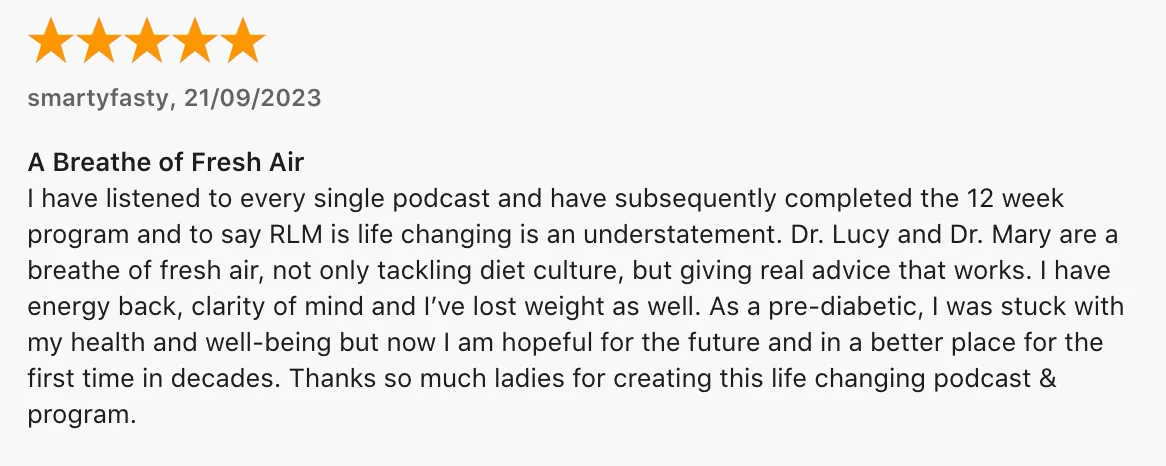
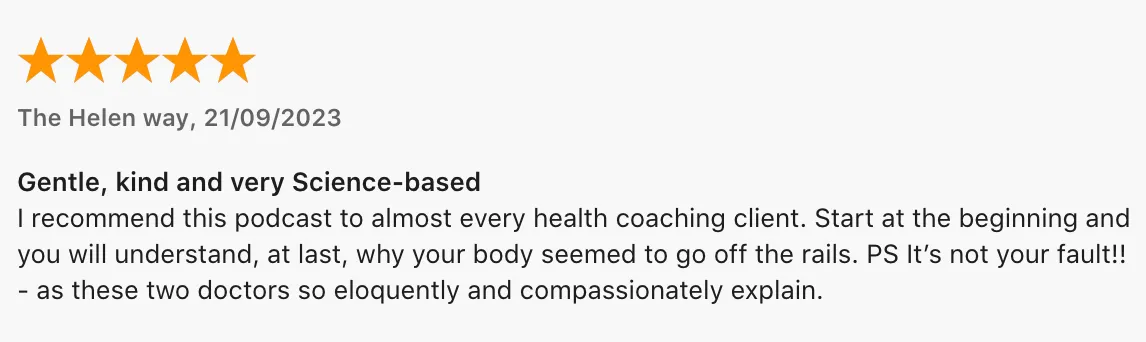
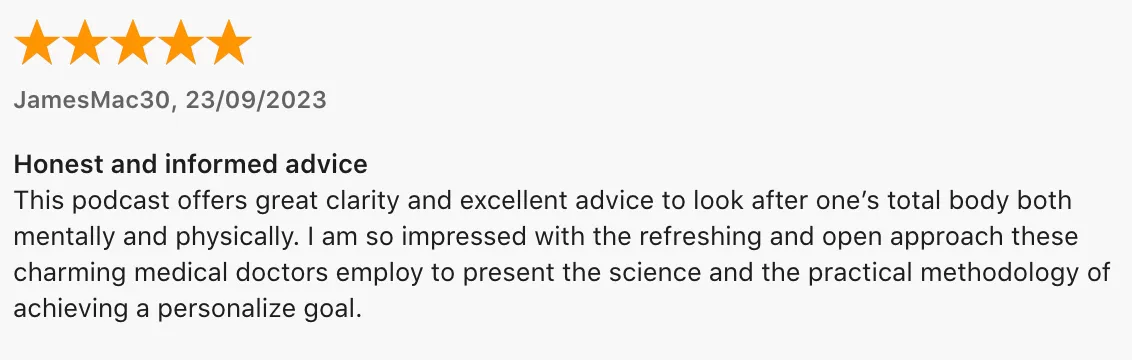
One of Australia's Most Popular Podcasts with Hundreds of 5 Star Reviews

Grab your FREE Ebook copy now!
Have you struggled to lose weight and keep it off?
Start your journey to boost metabolism and transform your body into a fat-burning powerhouse.
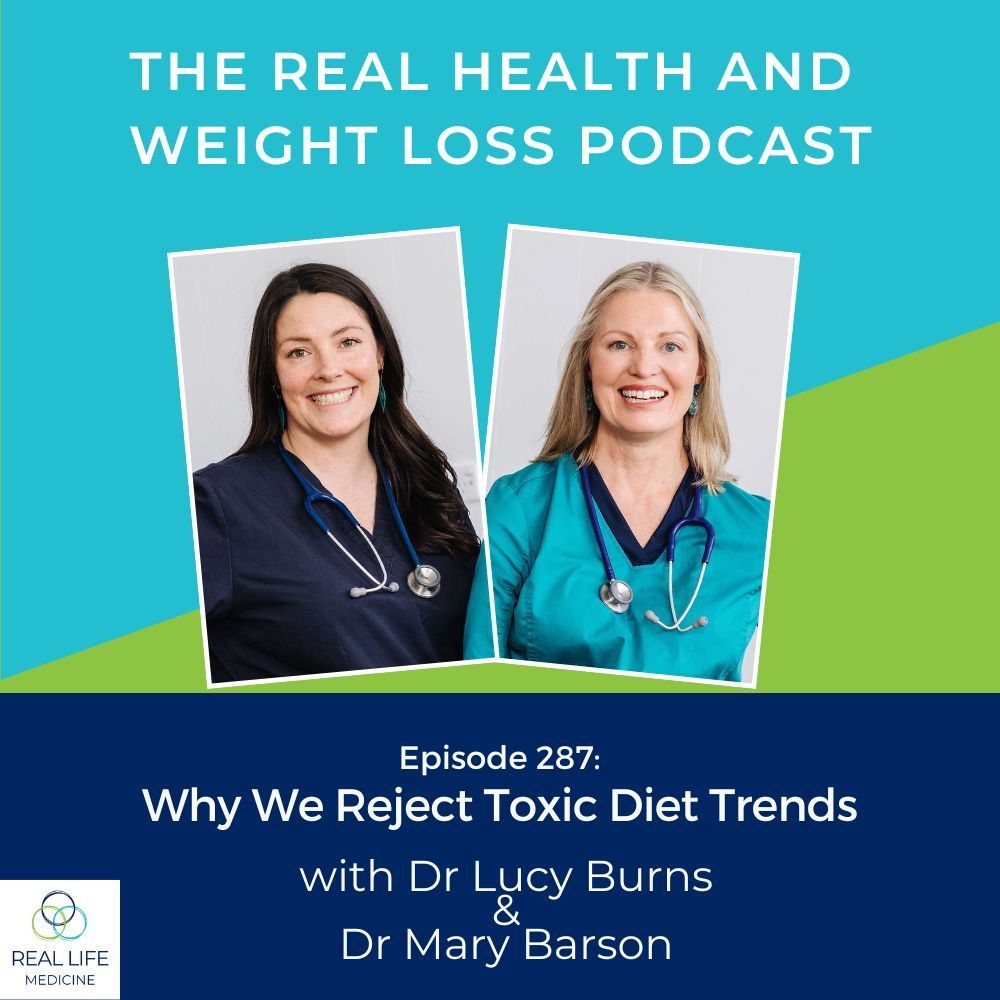
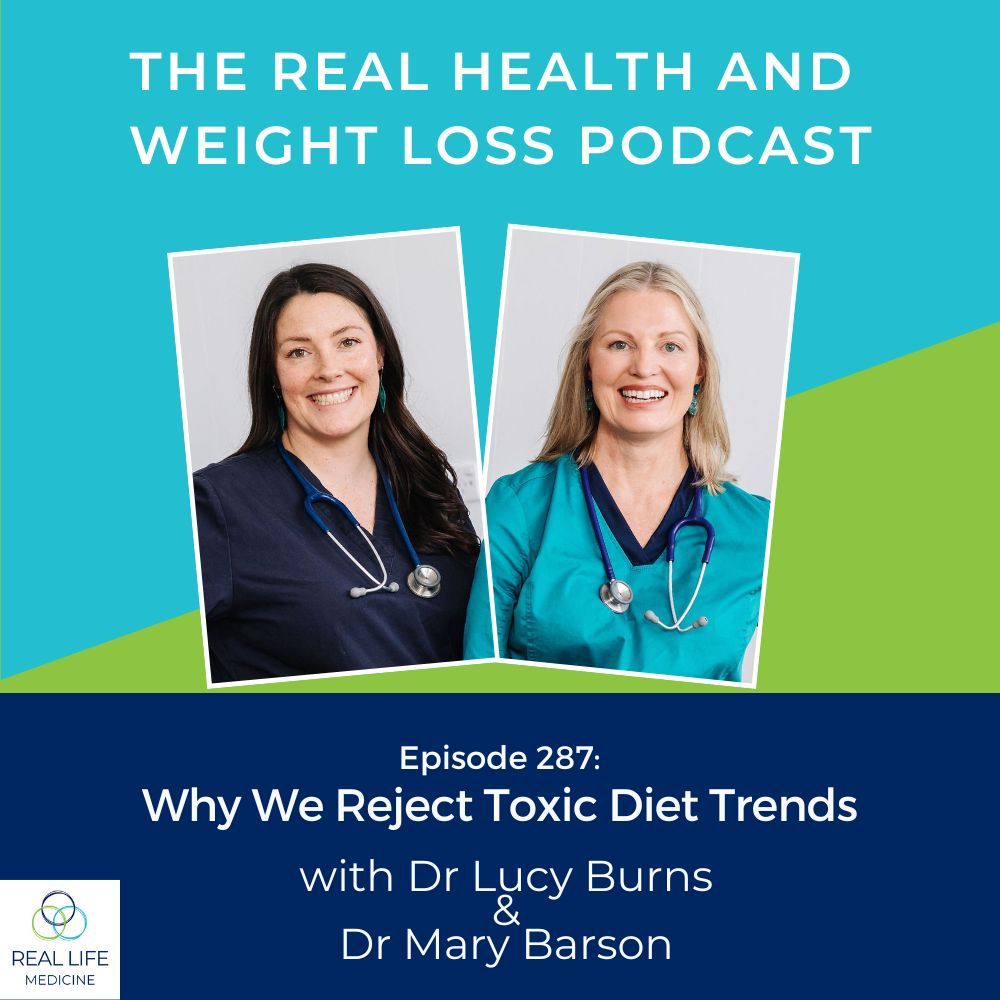
Episode 287:
Show Notes
This episode of The Real Health and Weight Loss Podcast (Episode 287) features Dr Mary Barson and Dr Lucy Burns discussing why weight loss competitions are harmful and deeply rooted in toxic diet culture. The discussion was prompted by someone suggesting they run an 8-week competition where the person who loses the most weight wins $5,000, along with using "aspirational mentors" based on physical appearance.
Why Weight Loss Competitions Are Harmful
- They embody diet culture: Weight loss competitions reinforce the harmful belief that thinness equals health, morality, attractiveness, and worth—prioritising appearance over actual well-being.
- They ignore human biology: Such competitions disregard metabolic health, mental health, hormonal factors, neurodiversity, trauma history, and long-term sustainability.
- They perpetuate shame: Shame is unproductive—it shuts down growth and change rather than fostering healthy habits.
- They reward genetics over effort: Competitions reward people's genetic predispositions and punishing restrictive behaviors rather than consistent healthy lifestyle changes.
- Health and thinness are separate: Being thin doesn't guarantee health or happiness, and people in smaller bodies can still be unhealthy or unhappy with themselves.
- Worth is not measured in kilograms: Compassion and self-kindness should be prioritised over shame and judgment.
- Sustainable habits matter: The focus should be on developing consistent habits and behaviors that improve metabolic health, not achieving a number on the scale at any cost.
- Everyone deserves compassion: Every person deserves to live free of stigma, shame, and judgment while pursuing optimal health on their own terms.
Alternative Approach
The doctors distinguish their approach by rewarding effort rather than results—such as tracking healthy behaviors like walking or maintaining good sleep habits—instead of competing to lose the most weight. They emphasise helping people make peace with themselves and their food while building sustainable skills for long-term health.
Episode 287:
Transcript
Dr Mary Barson (0:04) Hello, my lovely friends. I am Dr Mary Barson.
Dr Lucy Burns (0:09) And I'm Dr Lucy Burns. We are doctors and weight management and metabolic health experts.
Both (0:16) And this is the Real Health and Weight Loss podcast!
Dr Mary Barson (0:21) Hello lovely friend, Dr Lucy here on what is a spectacular Tuesday for recording. No idea what the weather is going to be like on the day of release. This is actually take two of our recording session we attempted earlier, but my little dog Sunny had other ideas and she was crying and carrying on, and we just abandoned. Sometimes you just need to cut your losses. Fortunately, I am very, very pleased to, you know, let you know that Dr Mary is also currently free at this time for our lovely recording, so she's here, not in the studio with me. If we had a studio, I would be able to say that, but she's certainly here in the virtual recording room with me. Hello Miss, how are you?
Dr Mary Barson (01:07) Very good, very happy to be flexible around baby dogs. You've got to be kind to the baby dogs of the world. Happy to be here.
Dr Lucy Burns (01:17) Indeed, and look I can't complain. She's a very good dog. She sleeps well, but when she's awake, she's a curious little thing who likes to bite just about everything as she explores her way, and so she needs supervision, and that was what I was doing.
Dr Mary Barson (01:33) Yeah, I remember that phase. Yes. All right, so today, while the puppy's asleep, we have to quickly get this done before she wakes up. Today we're going to talk about why we think weight loss competitions are toxic, how they are unhelpful, and deeply rooted in diet culture.
Dr Lucy Burns (01:56) Yes, absolutely. And some of you at home might be thinking, what are you talking about? So here's a little backstory. Dr Mary and I were recently just in a little group, and this is around emails and, you know, just getting our messaging clear, making sure that what we're all about is what people hear. So this other person in the group, who is, I'm sure, very kind — we don't know her, I'm sure she's very, very kind — decided to offer us some advice. And the advice was well-intentioned but completely, in fact the reason it was helpful, it's the antithesis of what we promote and what we feel. So she said to us, "I know how you guys can fill your programs — people will be knocking on the door to join." And so of course, I'm sort of going, "Oh no, that sounds interesting." She said, "So I'm in this group, and they have an eight-week challenge, and the idea is whoever loses the most weight gets $5,000."
Dr Mary Barson (03:03) She said, "It's really motivating. We get really competitive with each other, you know, and it works. It really works." Yes, but yes, it did make Lucy and I both go, "Oh no, no we won't be doing that." Why won't we be doing that, Lucy?
Dr Lucy Burns (03:18) Yeah, well she actually popped in another tidbit. And again, this is no shade on her — this is understanding that this person was trying to be kind. So she offered this advice that there was another person in the group who she aspired to be like. The aspiration was on her physical appearance, so she aspired to look like this person, to have this. In fact, she said, "This person has the body I want."
Dr Mary Barson (03:43) I want — yep, she's got my body.
Dr Lucy Burns (03:45) Yes, so she offered to us that maybe we could have mentors that were sort of aspirational, and that they could then help people do what they do so that people will look like them. And again, ah, so my head, my brain, my brains are on the ceiling. I was trying really — you were much kinder than me, Mary. Mary’s very much more measured. Mary said, “Oh hmm, we'll take that on board.”
Dr Mary Barson (04:13) Yeah, thank you. Yep, yep.
Dr Lucy Burns (04:15) Yeah, but I had to actually say, “Actually, we won't take that on board,” and sort of explain what, why as doctors this is not a good idea, and why I think actually anybody who's involved with any program like this — this is a red flag. So today, I thought, Miss, I would go through why this is a red flag, because, you know, you may think, “Oh, well, a bit of extra push, a bit of extra incentive, a bit of extra reward, what's the harm?”
Dr Mary Barson (04:42) I think the harm is that it demonstrates pretty much everything that is wrong with diet culture. What I mean by diet culture is this whole system of beliefs that equates, you know, thinness with health, morality, attractiveness, and worth — something that prioritises your appearance over your well-being, and, you know, promises success if you just try harder. At its core, it's this whole, you know, “thin is good” message. “Bigger is better” restriction is a virtue, treating exercise as punishment. As health professionals, it's our duty to reject these toxic messages in diet culture because it ignores our human biology, it can create trauma, and it is profoundly unhelpful to both our bodies and our brains in the long term. This weight-loss-at-any-cost ethos is so damaging. It ignores our metabolic health, our mental health, our well-being, and our long-term sustainability — our long-term longevity, our life.
Dr Lucy Burns (05:54) For us, it is so profoundly against everything we stand for that it is sometimes hard to put into words just how bad this is. And I think the thing I was most gobsmacked about is that I thought these days were gone. Yeah, I thought we'd moved on as a society from this.
Dr Mary Barson (06:14) The Biggest Loser was big and done. I thought we've had the Netflix exposé on how terrible the Biggest Loser was for its participants and how damaging it was for their health and their life. We've moved on, but no — it is still happening.
Dr Lucy Burns (06:27) Yeah, it totally is. And, you know, I think we live in a little echo chamber where we're talking about health, where we talk about, you know, your worth is not determined by your weight. Whereas clearly there are other people in society who are nowhere near that idea — they're still in the thick of “thin is better, the faster you can lose weight, the better, the more weight you lose, the better.” And honestly, it is… I was both flabbergasted and, you know, gobsmacked — all of those words — and then later on a bit sad about the whole state of affairs and thinking, “Oh my god, this is still happening. What sort of a world do we live in?” And I guess, you know, it does, it is still happening. You see it. You work at Headspace, Mary, with young people. I see it.
Dr Mary Barson (07:18) Oh yeah. Oh man, yeah
Dr Lucy Burns (07:21) We see it. We see our people internalising what they perceive to be a failure. “I haven't lost any weight,” and, you know, I had one person say to me, “I just mustn't want it enough.”
.Dr Mary Barson (07:37) Yeah. That shame — these kinds of weight-loss competitions, they perpetuate the shame. And the problem is, shame is so unproductive. Shame shuts down growth, and it shuts down change. We need to move away from shame. We need to try and let go of shame. We need to find other ways to work with our bodies, ways that take into account our neurodiversity if that's an issue, our trauma history, our hormonal factors, our metabolic health, our quality of life — not just shame. Not just, “If you can't lose the most weight, then you failed. You should feel embarrassed about that. I am judging you. You haven't won.” Look, it is unsafe.
Dr Lucy Burns (08:24) Yeah, yeah, it is. There are some good people in the world. There’s some really good, you know, influencers that are calling this out. There’s a girl I follow called Alex Larch — she's extremely good at calling out this sort of behavior. You know, there were shows — I never watched this show, but I’ve seen little clips of it from her Instagram. It’s appalling. It is a show that judges the women, wear a bag over their head, and get judged on the shape of their body in front of, you know, thousands of people and televised. Again, I thought we were past all of that. And then I hear things like these weight loss competitions. So I think weight loss — this is part of the reason why every now and then I shrink away from the idea that we help people lose weight, because part of my brain goes, “But I don’t want to be part of that world.”
Dr Mary Barson (09:18) Goodness, no, no, no. I don’t want to be continuing to traumatise women that have already been traumatised by diet culture, because we are not in that world at all. We are not in the “thin is everything” messaging. Definitely not.
Dr Lucy Burns (09:38) No, no. And I think it’s really important to know that you are allowed to lose weight, because there are also people at the other end, you know, the body positivity movement, which is a wonderful movement. But then if people do lose weight, that’s suddenly they’re outcast from there. It’s like, “What, you didn’t really believe in body positivity?” And it’s like, yes, you can have both. So for us, it’s around doing behaviours, choosing a way of life that improves your health. And with that often comes weight loss, but you don’t need to get to the perfect number, the ripped abs, the defined, chiseled jaw if you’re a bloke, the booty if you’re a girl. You don’t need any of that to be healthy, strong, worthy. You just need good, optimal — doesn’t even have to be perfect, but optimal metabolic hormones, you know, strong-ish. Again, you don’t need to be lifting, you don’t need to enter a power competition, you don’t really even need to lift heavy — just need to be a bit strong. That’s good, strong enough that if you were to stumble, you don’t fall over. Yeah, yep. You know, it doesn’t have to be these really extreme aspirations that I think people think they have to achieve in order to live long, happy lives. It’s rubbish.
Dr Mary Barson (10:57) Yes, absolutely. Our worth is not measured in kilograms. You and I know that. Compassion first. Just do what you need to do to be healthy enough to live life on your terms so that you can chase your dreams, so that you can have the full and beautiful life that you want to have. I was thinking today as I was driving home from dropping my car off and doing 50 billion other things — I was like, geez, my life is very full, but it’s beautiful. I love my beautiful, full life, and I love that, you know, I am healthy enough to enjoy my beautiful, full life, and doing everything that I can with my genetics, with the cards that I’ve been dealt, doing everything that I can to be as well as I can. And that’s beautiful. That’s what helps me have a beautiful life. And I do not need to be entering weight loss competitions in order for my life to become more beautiful. In fact, that would actively corrode everything that I love about my life.
Dr Lucy Burns (11:54) I know it is tricky though, because those things sell. And this is the thing — I would rather, I would rather never sell a program ever again if I had to do this in order to sell them. That is the absolute truth. I think, as doctors, there are lots of money blocks. You know, we had — I had a lady called Denise Duffield Thomas, Denise DT, on as a podcast guest a few weeks ago. She helps women unpack their money blocks. There’s lots of thoughts around money and charging for your services, and, you know, as doctors, we occasionally get emails from people sort of berating us for charging for our services. It’s a very tricky space. But honestly, if it was all about the money, there are ways, in ways for me to make money.
Dr Mary Barson (12:38) Go and sell prescriptions… sucking supermarket shelves
Dr Lucy Burns (12:42) Ah, you could, I could just sell prescription pads online. Like, there’s honestly so many things that I could do that would make more money, but they just don’t align with our values, with what we’re trying to achieve, and the way in which we’re trying to help people. And what we hope is that we offer a service that improves the way people think about themselves, about their food, about their lifestyle. Now, when I say lifestyle choices, sometimes our choices don’t always feel like a choice. So again, it’s — that’s where the compassion comes in, because sometimes they’re not. Like, you know, there are people out there and they go, “Well, it’s my fault that I’m fat, I put the food in my mouth.” It’s like, ah, it’s so much more complicated than that.
Dr Mary Barson (13:34) Yes, that’s right. We need, you know, tools — the consistency tools for our mindset, for our emotional regulation. You need help building those sustainable skills that help you make the choices more easily so that you can have, like, long-term health and, you know, the beautiful life that you want. And I think a large part of it is to encourage self-kindness and curiosity over shame.
Dr Lucy Burns (14:00) Ah, absolutely, absolutely. And again, just remind — you know, we did the podcast about a couple of weeks ago — that we are all vulnerable to diet culture. We are vulnerable to that messaging. There are always going to be times where you look at yourself and you go, “Oh my god, I look terrible in those pants,” or whatever sentences might come into your mind. Do you know what though? Thin people have those too. So the size doesn’t necessarily mean that you never feel that. And there are plenty of people out there who are in smaller bodies who are still unhappy with themselves, with their lives, and they’re not always healthy. So got to be really, really clear on that — health and thinness are separate. One doesn’t mean the other. And thinness isn’t really — it’s not a goal that I think we aspire to, thinking that it will, you know, all our dreams will come true.
Dr Mary Barson (15:00) Mmm, it’ll earn us our place in the world. You know, just “if I could just shrink and get thinner, I’ll earn my place in the world.” I think this is a subconscious thought, or a conscious thought, that many of us have, but it’s not true and it is never true.
Dr Lucy Burns (15:14) No, it’s not true. There’s a little fine line — this is where we walk. That’s not true. But to dismiss anyone’s experience of weight stigma would also be unfair, because we know that weight stigma exists, and we know that people are judged, and that’s just wrong. So, at the end of the day, every single human deserves compassion, kindness, health — optimal health, again, whatever that means for them. They deserve to be able to live a life free of stigma, shame, and judgment.
Dr Mary Barson (15:50) Yes. To be at peace with themselves, to be at peace with their food, to be able to live the life they want and chase their dreams.
Dr Lucy Burns (15:59) Absolutely, whatever they are. All right, friends, that’s it for us. So this is why, again, we will never do a competition diary — never, ever, ever. No, no. Well, look, we’ve done little things to help motivate people to make lifestyle choices. You know, we’ve done little things like that. So that’s around, you know, ticking boxes off if you’ve gone for a walk, or ticking boxes off if you’ve gone to bed before 10:30, or things like that. And I think that’s completely different to just going, “Whoever loses the most weight wins five grand,”
Dr Mary Barson (16:32) Because you’re rewarding effort, not results. So the whole idea of these weight loss competitions is that they essentially kind of reward people’s genetics and people’s, you know, restrictive, punishing behavior rather than the effort in making healthy changes, yeah, then just developing consistent habits.
Dr Lucy Burns (16:43) Yeah, exactly, yeah, yeah. So how — you know, habits are helpful, consistency is helpful. Weight loss at any cost — not only harmful in the immediate term, but often in the long term as well, as, you know, muscle mass declines, and people go — no, they’re going to the gym, they’re still getting muscle — metabolic rate slows. It is just not — yeah, just unhelpful. Both of us are stumbling over our words today because we feel so much indignant rage. I know, I know. And it’s hard. Yeah, it is hard to sometimes articulate exactly how harmful and outrageous it is. And I’m still slightly flabbergasted that this, in this day and age, is still going on. And not only is it going on, but people don’t even realise how harmful it is, and they’re participating in this harmful activity thinking that it’s motivating them. Yeah, so anyway, as I said, no shade on this lovely woman — she was trying to help us, but thanks, but no thanks.
Dr Mary Barson (17:52) Indeed.
Dr Lucy Burns (17:53) All right, beautiful peeps, we’ll see you next week. Have a wonderful week. Bye for now.
Dr Mary Barson (17:56) Bye, bye.
Dr Lucy Burns (18:00) The information shared on the Real Health and Weight Loss Podcast, including show notes and links, provides general information only. It is not a substitute, nor is it intended to provide individualised medical advice, diagnosis or treatment, nor can it be construed as such. Please consult your doctor for any medical concerns.