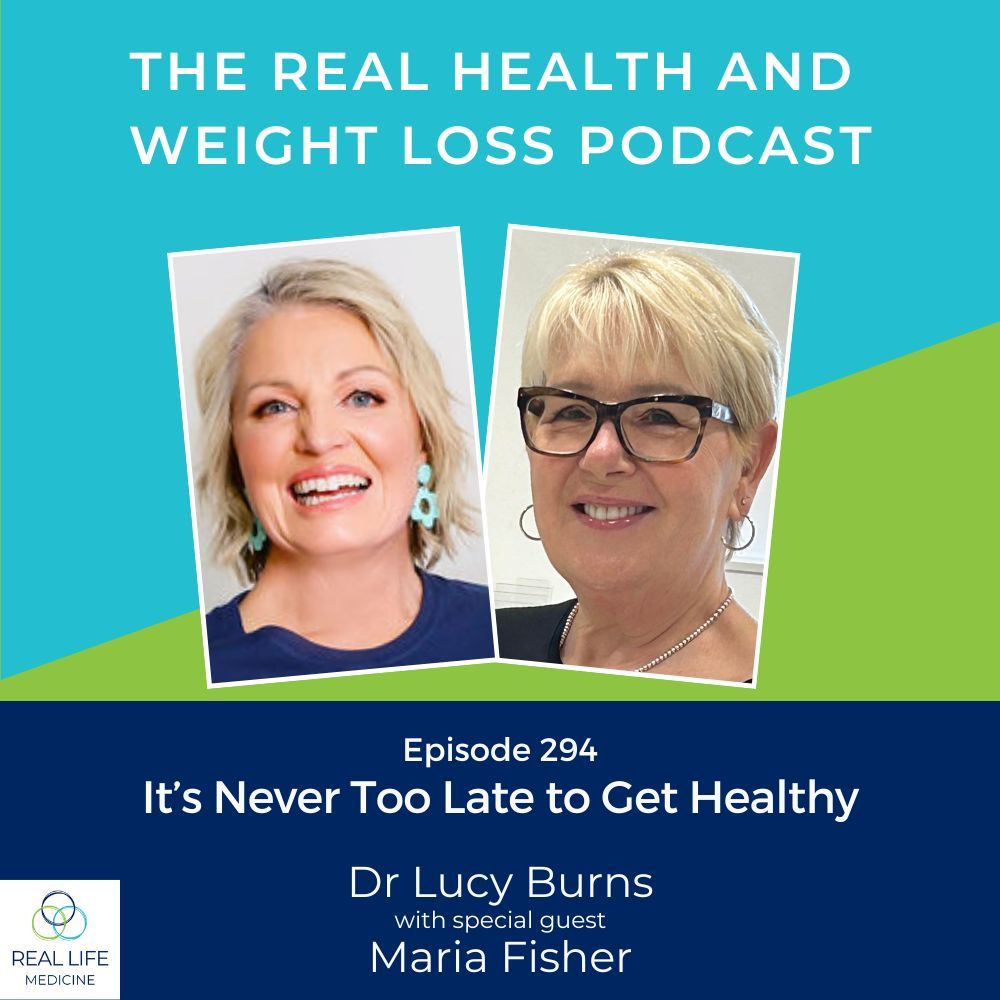

IT’S NEVER TOO LATE TO GET HEALTHY
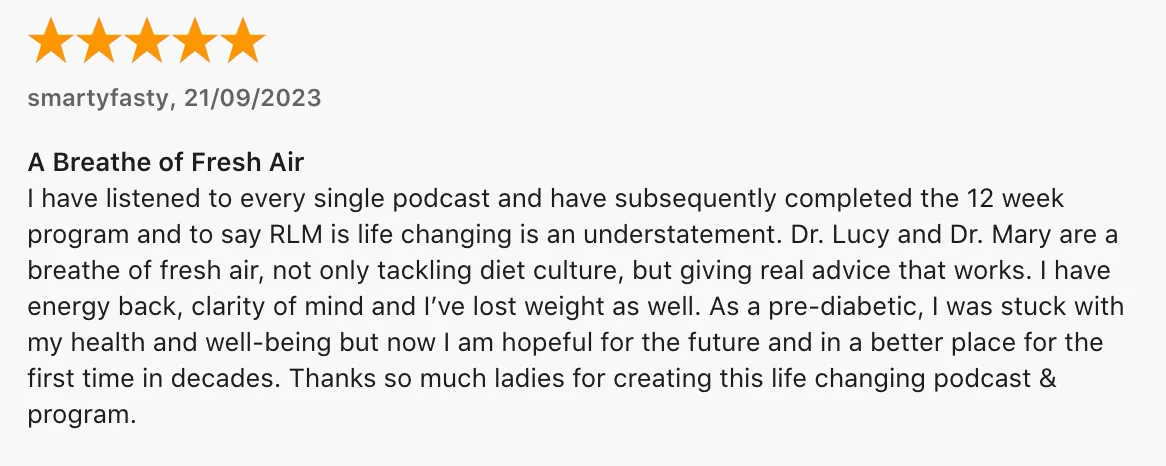
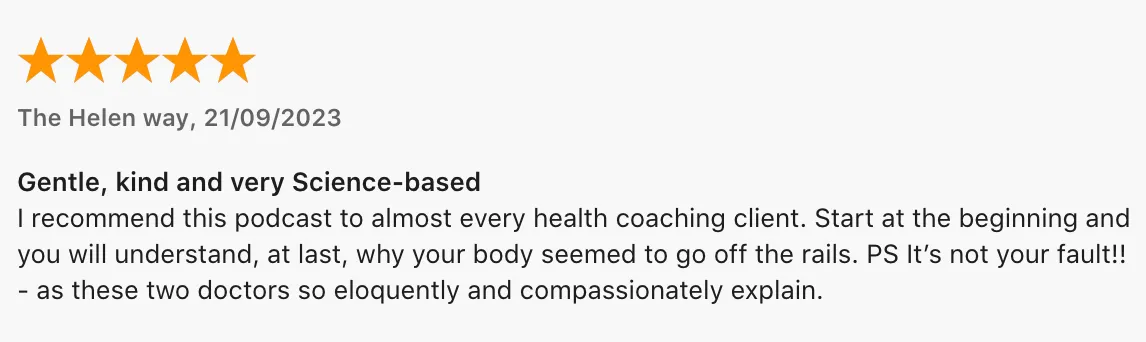
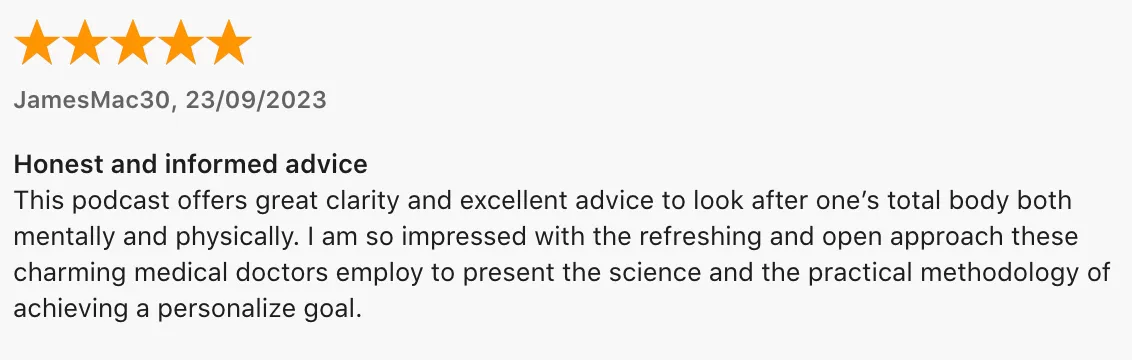
One of Australia's Most Popular Podcasts with Hundreds of 5 Star Reviews

Grab your FREE Ebook copy now!
Have you struggled to lose weight and keep it off?
Start your journey to boost metabolism and transform your body into a fat-burning powerhouse.
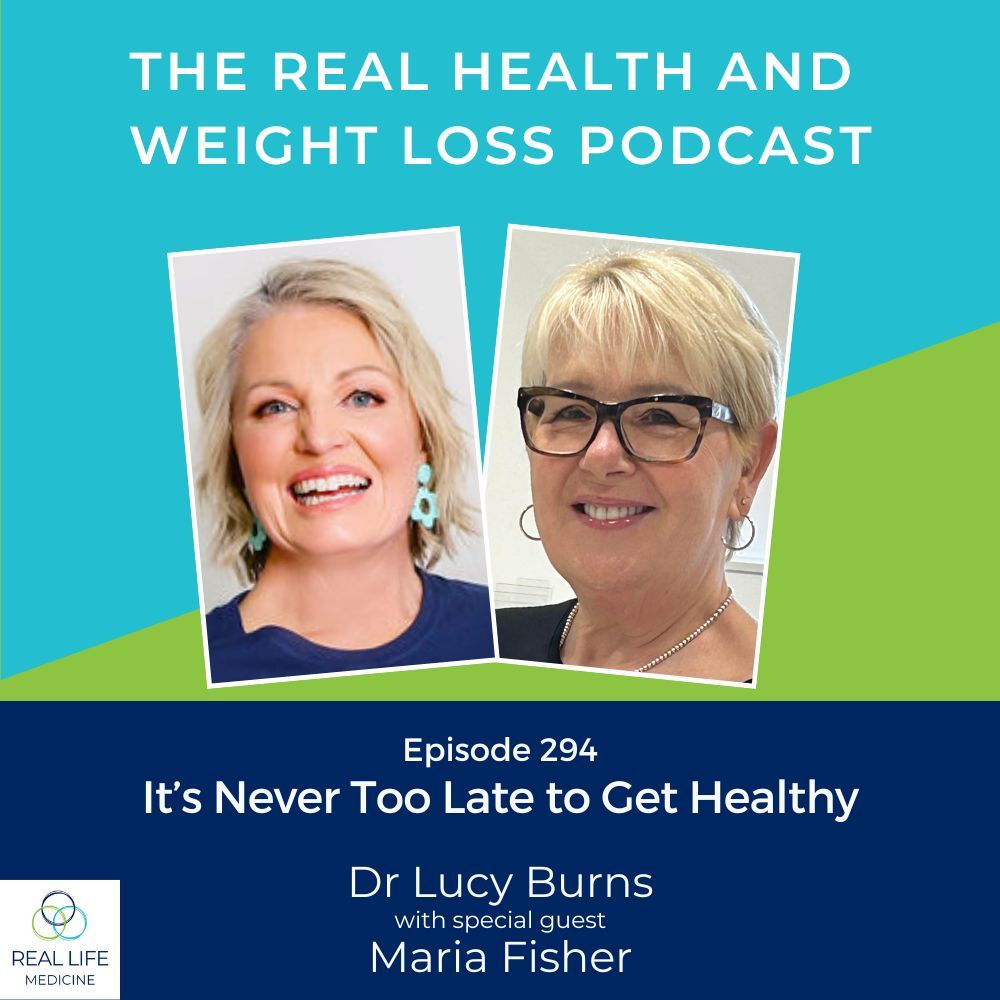
Episode 294:
Show Notes
This Real Health and Weight Loss podcast episode features Dr Lucy Burns interviewing Maria Fisher, a 70-year-old patient who successfully reversed her metabolic dysfunction through Real Life Medicine's program.
Maria's Journey
Maria gained significant weight over five years following quitting smoking and during lockdown. Despite trying everything she knew, traditional dieting methods stopped working, leading her to assume weight gain was inevitable with age. Her cardiologist referred her to Dr Lucy Burns after Maria developed heart issues, but she initially delayed seeking help for years.
The turning point came when Maria felt desperate - she experienced exhaustion, aches, inability to exercise, and realized her symptoms were weight-related, not just aging.
Key Medical Findings
Blood tests revealed Maria had severe hormonal dysregulation:
- Insulin resistance: Her body couldn't properly regulate blood sugar
- Leptin resistance: Her leptin level was 83 (normal is around 11), meaning her brain couldn't receive fullness signals
Dr Lucy explained this gave Maria a physiological reason for constant hunger and inability to feel satisfied - it wasn't about willpower or moral failing.
The Approach: Metabolic Reset
Maria completed a 12-week program focusing on:
- Low-carb, real food eating: Not ketogenic but reduced carbohydrates
- Intermittent fasting: Skipping breakfast, eating protein and vegetables for other meals
- Preparation strategy: Keeping ingredients ready (boiled eggs, tuna, salad) rather than elaborate meal planning
- Mindset work: Using the SLAB acronym (Stressed, Lonely, Angry, Bored) to identify emotional eating triggers
Maria reframed her approach as a "metabolic reset" rather than a "diet," which helped with social acceptance and explained the hormonal science behind it.
Results After 6 Months
Weight Loss
- Lost 14 kilograms (original goal was only 6 kg)
- Reached healthy BMI range
Health Improvements
- Leptin levels dropped from 83 to the teens, restoring satiety signaling
- Improved insulin sensitivity
- Eliminated inflammation in joints, fingers, and ankles
- Resolved IBS and digestive issues
- No more bloating
- Significantly increased energy levels
- Improved mobility
Lifestyle Changes
- No longer craves bread or carbohydrates
- Enjoys eating cream, butter, and mayonnaise while improving health
- Became health-conscious about ingredients, seed oils, and product labels
- Shifted identity to a "health-conscious person"
Additional Discovery
Through the program, Maria was diagnosed with ADHD at age 70, which explained lifelong patterns and eliminated guilt about past "mistakes". This highlights how weight management is deeply connected to personal development and understanding one's neurobiology.
Key Takeaways
- Being overweight is not your fault, but managing it is your responsibility
- Hormonal dysregulation (insulin and leptin resistance) drives hunger and prevents satiety - it's not willpower
- Sustainable change requires addressing mindset, emotions, and identity - not just food
- Small, incremental changes are more effective than dramatic overhauls
- You don't need to be "skinny" - healthy and strong at any age is the goal
- It's never too late to start feeling better - Maria transformed her health at 70
Start where you are. Take the next small step. My Metabolic Action Plan (MyMAP) begins February 14, and doors are closing soon. 👉 www.rlmedicine.com/map
Episode 294:
Transcript
Dr Mary Barson (0:04) Hello, my lovely friends. I am Dr Mary Barson.
Dr Lucy Burns (0:09) And I'm Dr Lucy Burns. We are doctors and weight management and metabolic health experts.
Both (0:16) And this is the Real Health and Weight Loss podcast!
Dr Lucy Burns (00:21) Good morning, lovely friend. I am not joined by Dr Mary today. I have with me a really inspiring woman that I think many of you will relate to. And I'm very excited for her to share her story with you. I know we get lots of feedback from podcast episodes where there's a real person that we're talking with. So I'm excited for this real person to tell her story and share some of her learnings and inspiration with you. So Maria, welcome to the podcast.
Maria Fisher (00:49) Thank you. Hello.
Dr Lucy Burns (00:51) Hello, hello. So I thought we'd just start by, I guess, you know, setting the scene for the people listening along and maybe, you know, start with talking about maybe how old you are and who referred you even to Real Life Medicine.
Maria Fisher (01:06) Okay, so I'm 70. I turned 70 last year. And I gained a lot of weight over the last five or so years, through quitting smoking and lockdown and all those kinds of things. And anyway, I couldn't lose the weight. And then I had some health issues, heart issues. I was talking to my cardiologist, and he referred me to Lucy and said, look, we shared a practice together, and I believe she gets really good results. So I didn't contact straight away. I put the card away. A few years went by, and I couldn't lose the weight. I tried everything I knew how to lose weight, but nothing worked. And I just sort of gave up thinking, well, I'm middle age. This is what happens when you get to middle age. Then I got really desperate, because I felt terrible. I couldn't exercise. I was tired. I was achy. And I thought, wow, this is not—this can't be older. This is the weight. So then I got the card out, and I ran, and here we are. We started the journey, I think, six months ago. And that's how it started.
Dr Lucy Burns (02:20) And it's so interesting, isn't it? It is normal for people to think that I don't need any help to lose weight. Like I've done it before, I know what to do, I just need to do it. And it's a very common story that we hear where people are doing that, and what they're doing just sort of stops working. That sounds like that's what happened for you.
Maria Fisher (02:40) It just didn't work.
Dr Lucy Burns (02:41) Yeah. Yeah, absolutely. And the other interesting thing that you mentioned was that it was also about how you were feeling at that time. You know, it wasn't just that you, you know, clothes were tight, which is, you know, when we're 20, that's what we start getting worried about, that our clothes don't fit. But as we get a bit older, as a woman, we start to notice more about how we feel.
Maria Fisher (03:03) Oh, yeah. And I think it was probably more noticeable for me because I had all—I've sort of been able to manage my weight over most of my life. So this was a whole new thing, not being able to walk properly, having aches. I try and exercise and have to go and lay on the couch. I'd be so exhausted from it.
Dr Lucy Burns (03:23) Yeah, wow. So, you know, to cut a long story short, obviously, you know, we connected, and I know you, you know, you were doing our programs. You also have seen me in the clinic. And I know we've discussed before we came on air about some of your blood tests. And so we did sort of discover that you were insulin resistant and also leptin resistant. So for those at home listening, leptin is one of our other hormones. We've got metabolic hormones—insulin, leptin. We've got ghrelin, a few others in there. But we talk a lot about insulin and leptin and ghrelin. Insulin is the hormone that locks away our fat stores. And ghrelin is the hormone that makes us hungry. And leptin is supposed to make us full, supposed to tell our brain, you've had enough to eat, you're full now, you can stop eating. But what happens with leptin resistance is the brain stops hearing that signal. And so you don't get any cues that you're full. And so we can eat big portions. And I think you'll probably relate to this, Maria, but back in the old dieting days, I used to—the phrases that used to be bandied around a lot were that you'd stretch your stomach or you'd shrunk your stomach. Well, we now know that's not really—the only way to shrink your stomach is to have gastric surgery. And that really we're probably more talking about hormones because we know that hormones control hunger. So for you, did you find that it was easy just to keep eating? Did you have the off signal?
Maria Fisher (04:57) Before the program? Yeah. No, I didn't. I could eat huge amounts constantly all day long, snacking. You'd eat dinner, have a dessert, and then be looking for something more, you know, with your cup of tea. It was nonstop. Yeah. And I think I remember mentioning that to you once. I said, the weird thing is, I said, I get full really quickly. I'm eating my dinner or my meal, and I just can't eat at all. I get full. So that's all part of it. Yeah.
Dr Lucy Burns (05:25) Yeah, totally. Totally. And so the interesting thing for you—we did one at your leptin, which was, I think, something like 83. You know, normal leptin is about 11. And so it was very clear to me that, yeah, that you're leptin resistant. So you have a physiological reason for not having the off switch, which I think is really important for people to know. Because I think sometimes people just think they're being greedy, or they've just—you know, the word portion control gets bandied around a bit, like you're out of control, like you can't control your portions. And to some extent, you can't, but it's not a moral or a willpower or a disciplinary reason. It's hormonal.
Maria Fisher (06:10) Yeah, exactly. It's really great to find that out. You know, it's such a relief to know that it's not just about controlling what you eat, like in portions and all that sort of thing—dieting. I actually told people I was doing a metabolic reset, and everybody—if I said I was doing a low carb diet, everyone would go, oh, that's, how could you do that? If I say a metabolic reset, everyone would go, wow, what are you doing? And what does that involve? And then I can explain the hormones.
Dr Lucy Burns (06:40) Yeah, and I think that that is great. I know that low carb and keto diets were very popular, you know, in 2019, early 2020. And we're certainly not against a ketogenic diet if people want to do that. But you don't have to do keto, as they say, to be able to improve your metabolic health and to lose weight. You do probably need to lower your carbohydrates, particularly for people that are insulin resistant and leptin resistant. It's a really useful way to do it. But I think people think low carb means no carbs, or keto, and it doesn't have to be. So with your low carb lifestyle, what does that look like for you? Like, what's the sort of a day on a plate for Maria?
Maria Fisher (07:23) Oh, now? So because I eat intermittently fast, I don't have breakfast, which is fine, because I've never really been—I was just a toast and jam kind of person. So that wasn't a good breakfast anyway. So I just have any kind of salad or vegetable that I've got leftover, any protein—tuna, eggs, you name it, I can have it. I've come a little bit more organised, and I'll boil eggs up at the start of the week. And I always have tuna, and we have lots of leftovers. And I just found that you do have to be a little bit prepared. Like I find if I've got things in the fridge—salads and all that sort of thing there—it's much easier. You can grab it, go, because it is a little bit harder to eat out. So I'm a little bit prepared, and I'm a bit of a foodie. So I've really enjoyed finding recipes that are just as delicious. They don't need pastas and, and all that sort of thing, you know, because most of those things that make it delicious are the sauces and all that. So I've been able to develop—I started with your guide. I mean, I, you know, I use the guides, the red, blue, all that, and the recipe. So it gets you started. And then you can just—once you get the hang of it—you can adjust your own food and find recipes and eliminate things or put other little, you know, things in there. So it's pretty easy. And my partner eats the same food. He doesn't even hardly know. He didn't even realise we had mashed cauliflower once. He said, this texture is a bit funny, you know, instead of potato. Yeah. So I love that. I love pureed cauliflower.
Dr Lucy Burns (09:02) Oh, it's, it is, it's totally delicious. And I think the—you're absolutely right—it is. It's thinking about it's not about what you're missing out on, because you can swap just about anything. But I love the way you said you, you kind of need to be, you do need to be a little bit prepared. But to be honest, I am not a person who's organised. I don't meal plan. I don't even—I can't think that far ahead. It's like, Oh, my God.
Maria Fisher (09:27) But I mean, just having, you know, a bag of salad or one of those bags or those—that's what I mean, being organised—that you've got that kind of stuff just really handy.
Dr Lucy Burns (09:38) So I reckon it's about not so much meal prep, but ingredient prep. So if you've got the salad leaves, your salad in your bag there, you've got your—you know, I have a meat subscription—but yeah, you've got tins of tuna, you know, maybe boil your eggs up at the start of the week. There's a few things that you can do to sort of set yourself up without having to actually think, right, well, what am I having for breakfast, lunch and dinner over the next seven days? Because that's, that's hard, I reckon.
Maria Fisher (10:05) Yeah. And look, to be honest with you, I actually feel I don't miss carbs. I thought it was going to be hard to start off, and how am I going to do it? And I just said, you know what, I was so desperate. I said, it's 12 weeks. I can do this for 12 weeks. If I set my mind to it, it's not forever. Well, I don't even want it anymore. I don't miss the bread. I don't even want it. And I feel really good. I don't feel bloated. I don't feel full. I don't have indigestion. So I don't even want that food anymore. I'm not interested in it. Sugar is a little bit tight, but carbs—like the rest of the breads and all that—I've not, yeah, they don't even taste the same really.
Dr Lucy Burns (10:44) No, no, it's really interesting. I think that you hit the nail on the head. I mean, you did the 12 week. We've got our metabolic action plan coming up, which is six weeks. And so we just say to people, don't think about it for the rest of your life, like you don't have to plan that far ahead. I mean, we don't think about lots of things for the rest of our life, but all of a sudden our brain goes, oh my God, I can never eat this again. It's going to be for the rest of my life. What am I going to do? And it's like, just think about the immediate future and then you can reevaluate later on. If you'd got to the end of 12 weeks and thought, actually, this is rubbish. I don't want to do this. Well, at least you gave it a red hot go.
Maria Fisher (11:22) I couldn't imagine anybody not feeling better by doing it, to be honest with you. Sugar is a bit different, you know, like an odd biscuit or something. That's a little bit of a different thing to the rest of carbs, but yeah, I can't see how anyone would not, once you try it, I actually refer to it as being like quitting smoking. When I stopped smoking, to me, that was so hard. I really thought, how, for the rest of my life, I'm never going to be able to have a cigarette. And now I wouldn't have a cigarette if you gave me a million dollars. Okay. I did it at the time. It's just, this is a little bit different because, you know, okay, in 12 weeks time, if I wanted to, I could have something. But by the time the 12 weeks is up and I was pretty strict, I didn't want it.
Dr Lucy Burns (12:09) Yeah, yeah, absolutely. And it's really a gentle way to approach it. So rather than going, oh, well, I'm quitting carbs, I'm never having them again, it's like you just do this sort of experiment and go, well, I'll see how I go.
Maria Fisher (12:22) The 12 weeks, I looked at it more as a look, I have to improve my health, I have to lose weight, and it's going to take some discipline of some sort. If I can eat cream, have cream and butter and mayonnaise, to me, that is just, that's an amazing way of eating.
Dr Lucy Burns (12:41) Yes, exactly. I remember thinking that exact thing. I remember thinking, why would I want chips when I can have halloumi? Yes. Yeah. Why would I want this, you know, insert thing when I can have some steak with a bit of butter on it? Because when I have steak with a bit of butter on it, I feel like I'm eating in a restaurant. Yeah, it's like you're cheating. Yeah, yeah, it's fancy food. It's fancy food. Yeah. I love that. Yeah. And I know, you know, and again, the 12 week program, as My Metabolic Action Plan, it's more than the food. You know, we talk a lot about stress and sleep and particularly managing emotions around food. How did you, how did you go with that bit of it?
Maria Fisher (13:22) Well, that was really important. That was probably one of the most important things. And I still use that today, like the slab analogy. You know, if I had that day and I think, oh, do I want to hang on? Why am I wanting that?
Dr Lucy Burns (13:36) Yes. So for our listeners, the SLAB is an acronym for working out what emotion you might be feeling, or the common emotions to eat, and they are Stressed, Lonely, Angry, or Bored. So I love that. So you get to, you've explained, you kind of do a little pause and ask yourself, which slab is it?
Maria Fisher (13:57) It's true. It really is. Yes. I still use that today, actually. So.
Dr Lucy Burns (14:04) Yeah, yeah, I know. Because the thing is that it's not like it's all done and dusted. And it's, you know, oh, good, 12 weeks done, dusted, I'm cured. It's ongoing. We need to be always ongoing, you know, everything in life is ongoing, isn't it? It's like gardening.
Maria Fisher (14:18) Well, I think it's just, this has been like peeling back an onion for me. So the weight and everything is one aspect of it. But, you know, then I've got a little bit of mental health that's come up, ADHD, which we did the test. And I said, wow, that explains a lot about my personality. We fancy finding that out at 70 years of age, and thinking, well, I've lived this long with it, you know, I can manage, but I am going to explore it further. Because now that I've eliminated all these crutches of my life, smoking and the food and alcohol here and there, shopping, there is an underlying issue. So I've got to keep going with that. So even if I think, well, why not? You know, I mean, yeah, absolutely. I've learned a lot about myself for sure.
Dr Lucy Burns (15:08) Yeah. And that's part of it, isn't it? It's, you know, our favorite. Well, we've got lots of, but one of our favorite things is that really weight management, weight loss, it's a personal development program. You need to understand yourself.
Maria Fisher (15:21) Yes, it's exactly that.
Dr Lucy Burns (15:22) Great. And I love that. So you started to learn that actually, yeah, you've got the criteria, meet the criteria for ADHD. Actually, a lot of people in our world. And it sort of feeds into that thing that, you know, we've got metabolic hormones that drive hunger that stops satiety. And that's one aspect of it. And then we've also got neural programming. You know, people with ADHD are more likely to seek dopamine producing activities. So they're more likely, people think of it as an addictive personality. But in fact, it's often ADHD, certainly more common in people with a history of trauma. But there's, yeah, there's so much more than just, oh, well, just follow this meal plan. You'll be right.
Maria Fisher (16:11) Yeah. And so it's been quite, quite an eye opener, you know, to have this development at this stage of my life. And actually, you know, I don't, looking back at, you know, my life, the ADHD, I've achieved a lot from it. But I don't feel, you know, yes, I made some mistakes. But that was all part of, you know, learning. And I feel now that it's kind of a relief, I don't have that guilt, that I did make those mistakes, because it really wasn't my fault. I didn't make these mistakes. Just, you know, there was a reason that I wasn't on my breath.
Dr Lucy Burns (16:49) Yeah. You're actually bringing up all of my favorite sayings. Because again, even around weight management, we always say to people being overweight is not your fault. But people have so much self loathing and self flagellating over the fact that they've gained weight, and they can't lose weight. And they think they're just weak. And it's not your fault. But to quote a Mel Robbins thing, it is your responsibility, because no one's going to come and save you. No one's going to do it for you. But people will help you.
Maria Fisher (17:18) Yeah, it's just that education. It's just starting, isn't it? It's getting that mindset, hitting the rock bottom, whatever it is of doing it. I remember starting the program, and I thought, Oh, this was kind of, it just seemed too good to be true. You know, like, I was eating all this food I liked. And there was I wasn't counting anything, because I don't want to do that sort of thing. And I remember asking you one day, and you said, Just trust the process, just trust it. Because you're sure I can have butter, and you're sure I can eat cream. And you know, obviously not mountains. But then sure enough, once that analogy you use, the tool shed opened up, the white sun, I thought, Wow, just kept coming off and coming off and coming off.
Dr Lucy Burns (18:00) I know. And it's, it's so exciting, I guess, for you, because I'm assuming in all of this, you now feel better.
Maria Fisher (18:08) Oh, you know, I actually feel as if I was taking 10 years off my life. It's not just about how I look, it's actually how I feel, the energy, the aches and the pains. And the one thing that I found really amazing was that I don't have inflammation. I used to have fingers, my joints would be a bit at my ankles, but I don't have any of that. Now. I don't, my body is not inflamed. I don't have digestive issues. I had IBS, that's all under control. Digestive system is really lovely. I think, as I've mentioned this already, the bloating, and that, oh, that's all gone. And it's just lovely.
Dr Lucy Burns (18:46) Amazing, amazing. And is your cardiologist happy?
Maria Fisher (18:50) Yes, yes, everyone's happy. All my, you know, spent doctors, I see Oh, great. And I think my goal, I remember doing that I said, I'll do 12 weeks, if I lose six kilos, whatever I lose will be a bonus, not ever dreaming that I've lost 14. And then I stopped really worrying about weight, it was more about wanting my goal, then getting into a healthy BMI. So once I got into that, I said, Alright, that's enough, I can just maintain from here on in. And I think you said to me, you know, it actually doesn't hurt to have a little bit of weight in middle age. And I kind of agree.
Dr Lucy Burns (19:25) Oh, absolutely. You know, we're not about being skinny, or thin. It's about being healthy and strong. And you don't need to be a rake to be healthy. That's for sure.
Maria Fisher (19:35) And I just look, I look slim in my clothes. So it's fine.
Dr Lucy Burns (19:39) Yeah, yeah. I love that. What I also love is that if we look at your, in, you know, your insulin levels got better. And I remember your leptin, because I know for a lot of people, and lots of people don't get the leptin tested. I understand it's not covered by the Medicare system. It's not, it's not super expensive. But also, a lot of doctors will think, well, we don't have a drug for that. So what's the point of checking it? But you know, your leptin was up in that 70s. And now it's in the teens. It's remarkable in three month’s time that your leptin results improved so quickly, which means for you that you get your satiety signaling back on board. So I love that, it makes everything so much easier when you're not having to battle dysregulated metabolic hormones.
Maria Fisher (20:29) Yeah, I think that just gives you this kind of confidence in yourself, because finding out that your insulin resistance is quite confronting. You know, I thought, wow, imagine if I had let this go, how that would have impacted. And that's, I guess, what my motivation is now going to this next stage of life is, yeah, I want good mobility, I want to be healthy. I don't want to, you know, so that was really confronting. I thought, wow, that could have been quite dangerous if I had let that go.
Dr Lucy Burns (20:57) Oh, absolutely. And that's what we want. We want all of our peeps to be, you know, gallivanting around in their glory years. And, you know, 70s, the new 45. It is when lots of women are just getting started with their life. You know, they're on the floor playing with grandchildren, they're off hunting.
Maria Fisher (21:16) Yes. Yes. And I've got it, I could hardly get, I could hardly even do up my shoes, my shoelaces. So I can get on, you know, I'm not sprightly, but I'm a lot better.
Dr Lucy Burns (21:29) I think you're amazing. You know, you're doing anything you should doing the successes that we talk about, the sustenance. You know, you've got that nailed now. Your sleep is good.
Maria Fisher (21:39) My partner said to me, he said, Oh, the next thing you want to do is you're on such a health trend. Now he said, the next thing you want to do is go to an ashram in India, because I'm totally health conscious on everything. You know, my labels and, and the, you know, I don't want anything that's got perfumes in it. And, you know, I'm reading, you know, the oils and then the seed oils.
Dr Lucy Burns (22:00) And I know, I know. And it's, it's quite tricky, it can be a bit confronting, because it feels like every single thing, you know, there's microplastics and forever chemicals, and you kind of can feel, oh, my God, you know, I'm living in this, you know, hostile environment. And to be honest, we kind of, we kind of are. But I think what we do is, it's easy to get overwhelmed by that. And I think, well, what we do is we control the things we can control. And it doesn't have to be perfect. But if we can make improvements, then that's got to be good.
Maria Fisher (22:33) Yeah, it's just being conscious of things like, you know, that great thing you put up on Facebook about the comparisons with, you know, the oils and the, yeah, the supermarket swaps. Yeah. Well, that's an eye opener. Because I was just buying milk, almond milk, and not reading the labels.
Dr Lucy Burns (22:50) No. And look, we will often make a decision based on price, because, you know, that's what we're conditioned to do. If we make it based on price. And again, I'm conscious of the fact that there are people with budgetary constraints, and so they don't get the full options available to them. But if you've got the means to buy the best quality food you can afford, then I think that's a really good investment for your health.
Maria Fisher (23:14) And I really, you know, when you go shopping, if you, you hardly go down those middle aisles, you're just down by the fresh produce. I look at my trolley sometimes I'm putting, I think, wow, look at all these vegetables, all this healthy food I'm putting up here. It's, it's really kind of, I'm quite proud of it, actually. Oh, yeah, yeah.
Dr Lucy Burns (23:31) I love that. I think what I mean, also, what I'm hearing from you, Maria, is that your identity, we talk a lot about identity as part of all of our programs, but you've really had an identity shift. And you've become, you know, a health conscious person. And so all of these actions that you're doing support that identity, which means you are more likely to keep going, rather than just looking at this as a, you know, this was just a, you know, a short diet, a quick refix. I can't wait to finish this and go back to the way I was. Any, none of that sort of thought process is going through your mind.
Maria Fisher (24:06) No, no. And it's all just little bit by little bit. It's stages. It's not, you're not doing one whole change. You change this a little bit here and then just keeps on going. So yes, it's wonderful.
Dr Lucy Burns (24:18) Absolutely. The power of small steps.
Maria Fisher (24:19) Yeah, yeah.
Dr Lucy Burns (24:20) Maria, I am so excited for you. You look fabulous. You sound fabulous. You're, you know, a bundle of energy and vitality. And it's exactly like you are exactly what we hope for people so that they can, you know, optimise their health, live their glory years gallivanting. It's brilliant.
Maria Fisher (24:39) Yeah, it's been great. Really, really. I loved it. I loved every minute of it.
Dr Lucy Burns (24:44) Oh, wonderful. All right, my lovely friend. Well, thank you. And lovely peeps. Thank you for listening. And I hope that Maria's story has been inspiring for you. And remember, it's not too late. You can start feeling better soon. Doesn't take forever. And the power of small steps, they are monumental. And so I will catch you all next week with another episode of the Real Health and Weight Loss podcast. Bye for now.
Dr Lucy Burns (25:15) The information shared on the Real Health and Weight Loss Podcast, including show notes and links, provides general information only. It is not a substitute, nor is it intended to provide individualised medical advice, diagnosis or treatment, nor can it be construed as such. Please consult your doctor for any medical concerns.